In-Water Hull Cleaning: Why Bottom Growth Costs You Speed and Fuel
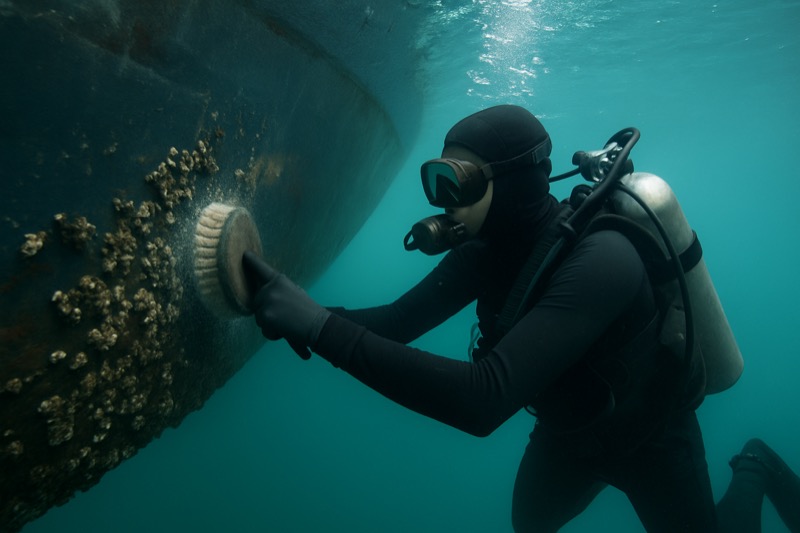
There is a slow, sneaky cost to keeping a boat in the water on the Suncoast, and most owners never see it directly. It lives below the waterline, out of sight, growing a little every day. It is marine growth on your hull and running gear, and it quietly steals your speed, burns your fuel, and strains your engine long before you ever notice a problem. Here is why bottom growth matters more than most people realize, and why regular in water hull cleaning is one of the best returns on money a boat owner can get.
What grows on your hull down here
Warm, nutrient rich brackish water is a perfect nursery for marine life, and Sarasota Bay, the Intracoastal, and the canals are exactly that. Anything you leave sitting in that water becomes real estate. Growth generally shows up in stages.
First comes the slime layer, a thin film of algae and bacteria that forms within days. It feels slick and looks like a light green or brown haze on the bottom. It seems harmless, but even a slime layer measurably increases drag.
Next comes soft growth, meaning heavier algae, grassy weed, and soft tube worms. This is the fuzzy, bearded look you see on neglected bottoms and around the waterline. It is thicker, it holds water, and it drags noticeably.
Then comes hard growth, the real problem, which around here mostly means barnacles. Barnacle larvae are floating in the water constantly, and when they find a surface they cement themselves down permanently and build a hard calcium shell. Barnacles are rough, sharp, and heavy, and a hull crusted with them is like trying to drive a car with the parking brake on. They also colonize the places that hurt performance most, like the running gear, intakes, and trim tabs.
In our water, this whole progression is fast. A clean bottom can pick up a slime layer within a week, meaningful soft growth in two to four weeks, and start setting barnacles within a month or so if the antifouling paint is old or weak. That is why in water hull cleaning is a recurring service and not a once a year event.
How growth steals your speed
A boat hull is shaped to slip through water with as little resistance as possible. Marine growth wrecks that in two ways. It adds roughness, turning a smooth surface into a textured one that grabs the water, and it adds bulk that the boat has to push through. Both increase drag.
The effect is not subtle. Even a light slime film increases friction across the entire wetted surface of the hull. Soft growth compounds it. A serious barnacle load can rob a planing boat of several knots off its top end and, worse, make it struggle to get on plane at all. Owners often describe it as the boat feeling sluggish, heavy, or bogged down, like it is dragging something. That feeling is real, and it is drag you are paying for every minute the engine runs.
For boats that need to get up on plane to run efficiently, this is a double hit. A fouled bottom makes the boat plow instead of plane, which is the least efficient way a hull can move, burning maximum fuel to go a modest speed.
How growth burns your fuel
Fuel is where bottom growth hits your wallet the hardest, and it is the cost owners most consistently underestimate. When drag goes up, your engine has to work harder to hold any given speed, and working harder means burning more fuel.
Think of it this way. To cruise at the same speed you always have, a fouled boat has to push through more resistance, so you feed it more throttle, so it drinks more fuel per mile. The engine is doing extra work just to overcome the beard on the bottom. Depending on how heavy the growth is, that can mean a real, measurable jump in fuel burn for the exact same trips you have always taken. On a boat with serious barnacle fouling, owners can see fuel efficiency fall off significantly, and the fuel savings alone from a clean bottom often cover the cost of regular cleaning.
There is a comfort and range cost too. A boat that burns more fuel has less range, which matters when you are running out through the Gulf passes and want to fish a spot well offshore. A clean bottom gives you back your range as well as your speed.
The costs you cannot see on the fuel dock
Speed and fuel are the obvious costs, but a fouled bottom does quieter damage too.
Your running gear suffers first. Barnacles on a prop throw it out of balance, which causes vibration you can feel through the whole boat. That vibration wears cutlass bearings, seals, and struts over time. Growth on intakes restricts the cooling water your engine depends on, which can push engine temperatures up. Growth on trim tabs and transducers keeps them from doing their jobs, so your ride and your electronics both degrade.
Then there is the engine itself. An engine constantly working harder to overcome drag runs hotter and lives under more load than it was meant to. Over a season, that extra strain adds wear you paid for in reduced engine life, not just in fuel.
And there is the paint. Modern antifouling bottom paint works by slowly releasing biocide at its surface to discourage growth. When you let heavy hard growth build up and then have it scraped off aggressively, you tear through the paint and shorten its life. Gentle, regular cleaning that removes growth before it hardens actually preserves the antifouling paint, so you get more seasons out of each haul out and repaint. Letting it go and then blasting it clean does the opposite.
Why in water cleaning is its own service
Cleaning a bottom is not something you fold into a wash and wax, and it is genuinely different work. It happens below the waterline, so it is done by a diver working in the water at your slip, lift, or dock. It requires knowing how to remove growth thoroughly without gouging the gelcoat or destroying the antifouling paint, which is a real skill. Too gentle and the growth stays, too aggressive and you damage the paint that is supposed to protect you.
A proper in water cleaning covers the whole wetted surface, the hull sides and bottom, plus all the running gear, the props, shafts, struts, trim tabs, intakes, and transducers. The running gear matters as much as the hull, because that is where a little growth does outsized damage to performance and equipment.
Because the growth cycle here is fast, the smart approach is frequency over intensity. Cleaning a lightly fouled bottom every month is quick, gentle, and preserves your paint. Waiting until the bottom is a barnacle reef means a harder, more expensive cleaning that beats up the paint. Our in water hull cleaning service is built around that regular, gentle cadence for exactly this reason.
How often, and who needs it
Any boat that lives in the water needs recurring bottom service. As a rule of thumb, most boats kept in the water on the Suncoast do well on a monthly hull cleaning, with the interval tightening in the warm months when growth explodes and stretching slightly in cooler weather. Boats with fresh, strong antifouling paint can sometimes go a bit longer, while boats with old or worn paint need cleaning more often because the growth grabs on faster.
Boats on a lift are the exception. Because they come out of the water between uses, they do not foul the way in water boats do, which is one of the biggest advantages of lift storage on our canals in places like Siesta Key and Bird Key. If your boat is on a lift, your cleaning attention goes to the topsides rather than the bottom, and you can read about that schedule in our article on how often to wash and detail your boat.
Marina and dock kept boats in Venice, Nokomis, and along the Intracoastal are the ones that benefit most from a standing hull cleaning schedule. If your boat sits in the water full time, regular bottom cleaning is not a luxury, it is basic maintenance that pays for itself.
Pair it with the rest of your care
In water hull cleaning handles below the waterline, but a boat needs care above it too. Salt and sun are working on your gelcoat, glass, and metal the whole time, which is why most in water boats pair bottom cleaning with a regular exterior wash and detail and periodic protection like oxidation removal and wax or ceramic coating. Bundling it all into one recurring maintenance program means the whole boat, top to bottom, stays healthy on a single schedule you never have to manage.
Stop paying the drag tax
The math on bottom cleaning is about as clear as it gets in boat ownership. A fouled bottom costs you speed you can feel, fuel you can measure, and wear you will pay for later. Regular in water cleaning costs a fraction of what that adds up to, and it keeps your antifouling paint and running gear healthy on top of it. For a boat that lives in the water, it is one of the highest return things you can spend money on.
If you keep your boat in the water anywhere in Sarasota County, we can put it on a hull cleaning schedule that matches your slip, your paint, and your usage. Take a look at everything we do on our services page, check straightforward numbers on our pricing page, or get a free quote and we will get a diver on your bottom before the next barnacle sets up shop.