Black streaks on a boat hull: causes, removal, and prevention in Sarasota
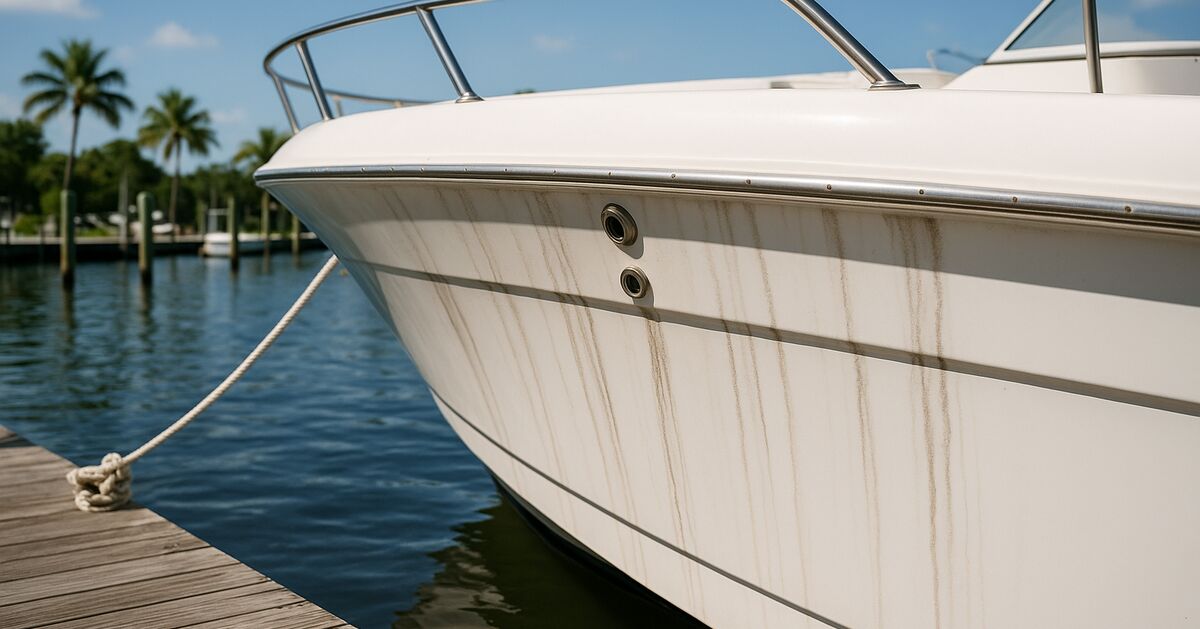
Black streaks are one of the most frustrating things a Sarasota boater can look at on a clean day on the water. You wash the boat, step back, and there they are again, running down the hull like dirty teardrops. They weren't there last week. Or maybe they were, and you scrubbed them off, and now they're back in the exact same spots.
This isn't bad luck. It's chemistry, biology, and Sarasota's particular climate all working together against your gelcoat. Once you understand what's actually happening, you can fix the problem properly rather than just wiping the surface over and over.
What actually causes black streaks on a boat hull
There isn't one single cause. In most cases, what you're looking at is a combination of two or three things happening at once.
Mold and mildew colonies. This is the most common culprit on the Gulf Coast. Sarasota averages around 55 inches of rain per year, most of it dumped in fast, heavy afternoon showers between June and September. That moisture sits on deck surfaces, drains down the hull, and carries with it organic material: pollen, algae spores, bird droppings, fish blood, bait residue, tanning lotion, sunscreen, and anything else that lands on the boat. That organic soup pools in low spots, runs in predictable paths down the freeboard, and feeds mold colonies that stain the gelcoat black or dark gray.
Oxidized metal fittings and hardware. Look closely at where your streaks originate. If a black streak starts just below a stainless steel fitting, a rusting screw, a cleat base, or a rub rail insert, you're looking at metal oxide runoff. Stainless steel is not immune to rust, especially in saltwater. The iron compounds leach out, mix with water, and run down the hull, leaving a dark trail. Brass fittings do something similar with a greenish-black oxidation product.
Diesel or exhaust residue. On boats with diesel engines or generators, the exhaust port leaves a persistent black sooty streak. The combustion byproducts stick to the gelcoat with oily tenacity. This type of streak tends to be greasier to the touch than a mold streak and doesn't respond to the same cleaners.
Bottom paint migration. If your boat sits in the water and you use ablative antifouling paint, small amounts of that paint wash up the hull as the boat moves or as wakes roll through the marina. The streak runs upward from the waterline and tends to be more diffuse and reddish-black or blue-black depending on your paint color.
Tannins from docklines and canvas. Old dock lines, especially natural fiber or old nylon lines that have absorbed tannins from wood docks, can streak the hull wherever they rest against it. Bimini top frames and canvas runoff carry tannins and canvas dye residue down the side of the hull too.
In practice, most boats have more than one of these going on simultaneously. The hull of a 25-foot center console that lives on a floating dock in Sarasota Bay is dealing with mold, metal runoff, waterline contamination, and probably some canvas runoff all at once.
Why they keep coming back
If you've scrubbed black streaks off your hull and watched them return within a few weeks, the reason is almost always one of these three things.
You removed the stain but not the source. Wiping a mold streak off the hull doesn't kill the mold colony. The colony lives in the porous surface of the gelcoat or in the crevice of a fitting. As soon as conditions are right again, it grows back and runs the same track down the hull.
The gelcoat is oxidized and porous. Oxidized gelcoat is like a chalk surface. It has microscopic texture that traps organic material and holds stains deep in the surface rather than just on top of it. If you're only wiping the hull rather than cutting and polishing it, you're cleaning the top layer but leaving contamination embedded below. See our post on why non-skid deck is harder to clean than gelcoat and how to restore it right for more on how porous surfaces trap contaminants differently than smooth ones.
No protective coating is in place. A bare, unprotected gelcoat surface gives mold, algae, and metal oxides a direct grip on the fiberglass. A proper wax layer or sealant coat creates a slick surface that contaminants sit on rather than soak into. When that protective layer is gone, every rain shower drives contamination straight into the surface.
The fitting or source isn't addressed. If a stainless screw is bleeding rust, no amount of cleaning will stop the streak from returning. The screw has to be removed, the hole inspected, and a non-corroding fastener or a proper sealant applied.
The right tools and products for removal
Not all black streaks respond to the same cleaner. Using the wrong product wastes time and can damage the hull.
For mold and mildew streaks:
- A dedicated marine mold and mildew stain remover works better than household bleach, which can dry out gelcoat and degrade sealants over repeated use.
- Apply to a wet hull, let it dwell for several minutes, and scrub gently with a soft-bristle brush. Aggressive scrubbing on a dry hull scratches the gelcoat.
- Rinse thoroughly. Leaving cleaner residue on the hull can itself cause discoloration.
For metal oxide streaks (the rust-colored or dark gray streaks below fittings):
- Oxalic acid-based cleaners are the correct tool. Products like Star Brite Rust Stain Remover or similar marine-grade oxalic formulas dissolve iron oxides without damaging gelcoat when used as directed.
- Wet the area first, apply the cleaner, let it work, and rinse with fresh water. Do not let it dry on the surface.
For exhaust and diesel soot:
- A degreaser is the first step, not a mold cleaner. The greasy binder in exhaust soot has to be broken down before the stain can be removed.
- Follow with a light polish to lift any remaining discoloration.
For bottom paint migration:
- This one often requires light compounding. The paint particles bond to the oxidized gelcoat just above the waterline. A fine compound applied with a rotary or dual-action polisher is usually necessary.
For stubborn stains that don't respond to any of the above, the next step is careful wet sanding with very fine grit (1500 to 2000) followed by polishing. This should only be done by someone experienced with marine surfaces. Cutting too aggressively removes gelcoat that cannot be replaced.
The prevention strategy that actually works
Removing the streaks is satisfying but temporary without a prevention plan. Here's how to break the cycle.
Inspect every fitting above the waterline. Get up close with good light and look at every screw, cleat, clam cleat, rub rail insert, and through-fitting. Any fitting showing rust bleed, pitting, or white corrosion needs to be addressed. Replace corroded fasteners with marine-grade 316 stainless or titanium. Bed fittings properly with polysulfide or polyurethane sealant so water can't track inside the laminate and bleed out contaminated.
Clean canvas and bimini tops regularly. Canvas that's coated with mold releases that contamination every time it rains. A clean, treated bimini top stops a significant source of streaking on the hull sides and stern. Our post on how to clean and protect your boat's canvas and bimini top in Sarasota's sun and salt air covers this in detail.
Rinse after every use. A fresh water rinse after every trip, even a quick one, removes the salt, organic material, and airborne debris before it has a chance to set. Boats that get a post-use rinse consistently have dramatically fewer streaking problems than boats that don't.
Wax or seal the hull on a regular schedule. A properly applied marine wax or paint sealant gives the hull a slick, hydrophobic surface. Water beads and runs off cleanly rather than sitting on the surface and carrying contamination downward in slow, concentrated drips. For boats kept on the water, a full detail including wax every four to six months is a practical minimum in the Sarasota climate. Our boat cleaning and detailing services include hull protection as a standard part of a full detail, not an afterthought.
Use a mold inhibitor on drain paths. After cleaning, some detailers apply a mold inhibitor or a diluted biocide solution along the typical drain paths on the hull. This doesn't have to be aggressive chemistry. Spray-on fabric protectants with mold inhibitors work reasonably well on the areas just below deck drains and fitting bases.
Keep the bilge and cockpit drains clear. Clogged drains mean standing water on deck, which concentrates mold and debris and eventually forces its way through to the hull sides. A clean drain path keeps contaminated water moving off the boat quickly.
Local factors that make Sarasota particularly challenging
Boaters coming from drier climates or from the mid-Atlantic are often surprised by how quickly black streaks form here. There are a few reasons the Gulf Coast accelerates the problem.
The rainy season runs roughly May through October, with August being the peak. During those months, a boat sitting at a dock on Longboat Key or in a slip near Osprey or Nokomis is getting rained on almost daily. Humid nights (frequently above 80 percent relative humidity) mean surfaces stay wet long enough for mold to establish and grow between showers.
The sun is intense but it doesn't sterilize. UV light does kill surface mold in direct exposure, but boats have plenty of shaded surfaces: under gunwales, under cleats, in the shadow of the rub rail, inside rod holders, behind motor mounts. Those shaded spots stay moist and warm, which is exactly the environment mold colonies prefer.
Salt air also slightly acidifies the surface of fittings and gelcoat over time, making oxidation of metal fittings faster and making the gelcoat itself marginally more porous and more hospitable to biological growth. Boats that are docked in the bay near Bird Key or out on Casey Key tend to accumulate salt exposure faster than boats kept on freshwater lakes, and that accelerates both metal oxidation and surface contamination.
Bird activity makes the problem worse near rookeries and popular fishing spots. Bird droppings are high in nitrogen and create a nutrient-rich film that feeds mold and algae aggressively. Spots popular for anchorage near Siesta Key or along the Intracoastal through Nokomis can see heavier bird-related staining than marina slips.
When to call a professional detailer
Some situations are a good candidate for DIY cleaning. A few fresh streaks on an otherwise well-maintained hull, cleaned promptly after each outing, can be managed by the owner with the right products and a bit of time.
But there are situations where the problem has advanced beyond what a bucket and brush will fix.
If the streaks are embedded in oxidized, chalky gelcoat, you need polishing and possibly light compounding before the surface will accept a protective coating. Attempting to wax over oxidized gelcoat is like painting over rust: it looks okay briefly and then fails quickly.
If streaks are appearing faster than you can clean them, the underlying source hasn't been found and corrected. A professional detailer who knows what to look for can trace the runoff paths, identify the fittings or areas responsible, and address both the symptom and the cause.
If the hull has never been properly compounded and sealed, the accumulated contamination embedded in the gelcoat is beyond the reach of surface cleaning. A professional cut-and-polish restores the integrity of the surface and gives protective coatings something solid to bond to.
Our team provides boat cleaning and detailing throughout Sarasota County, including Sarasota, Siesta Key, Longboat Key, Lido Key, Bird Key, Casey Key, Osprey, Nokomis, and Venice. If the black streaks on your hull have been winning the argument for too long, we're happy to have a look and give you an honest assessment. Visit our frequently asked questions page for more on what to expect, or get in touch to schedule a visit.
The streaks are solvable. They just need to be addressed at the right level, not just wiped off the surface again.