Why Siesta Key boats oxidize faster than Longboat Key boats
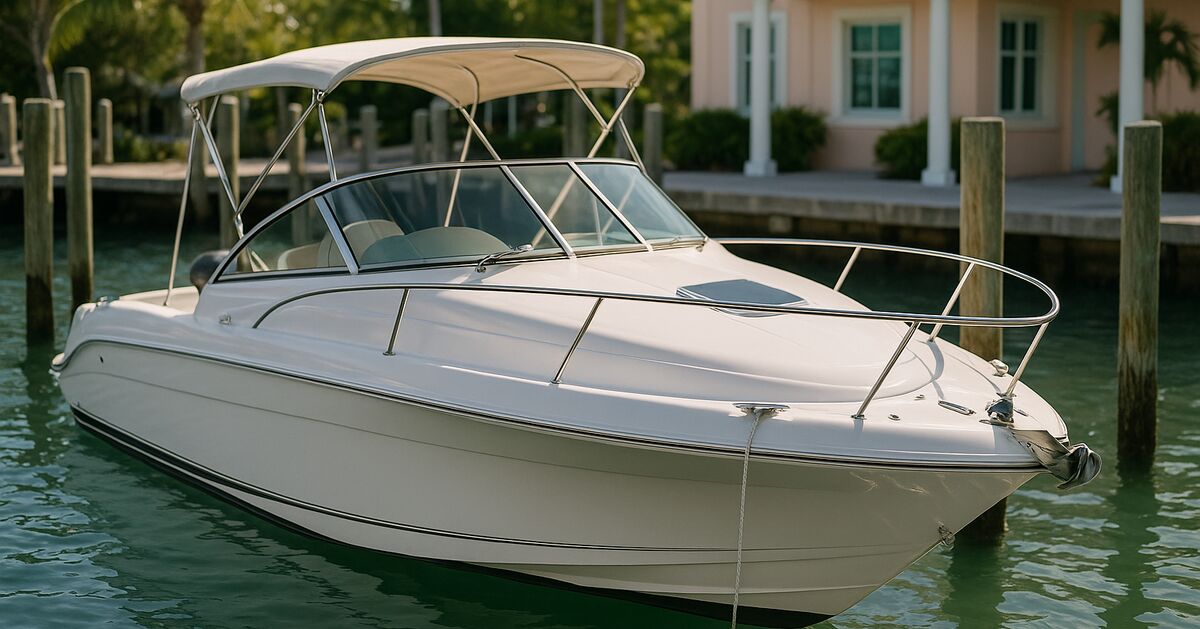
Salt, sun, and wind hit every boat on the Sarasota coast, but they do not hit every boat equally. If you keep your vessel at one of the marinas near Siesta Key and you have a friend who docks on Longboat Key, there is a good chance your gelcoat is showing its age faster, your metal fittings are pitting sooner, and your topside finish needs attention more often. That is not bad luck. It is geography, and once you understand the mechanics behind it you can stop throwing money at wax jobs that only last a couple of months and start protecting your boat in a way that actually matches the environment it lives in.
The core difference: open gulf exposure vs. sheltered bay
Longboat Key sits between the Gulf of Mexico and Sarasota Bay, and the marinas along its eastern shoreline, particularly on the bay side, benefit from a meaningful fetch buffer. The barrier island itself absorbs a lot of the direct gulf air before it reaches boats at the dock. Wind-driven salt spray is attenuated. The water in the marina basins on the bay side is calmer, and the relative humidity at dock level, while still high, is less relentlessly salt-laden than it is on the open gulf side.
Siesta Key is different in a couple of important ways. Midnight Pass Road marinas and the area around Siesta Key Marina sit much closer to the open gulf influence, and the Key's lower, flatter profile offers less of a windbreak. On any afternoon with westerly or southwesterly winds, which is most summer afternoons in Southwest Florida, boats at Siesta Key docks receive a direct bath of salt-saturated air moving off the open water. That constant salt deposition is the single biggest accelerant of oxidation on fiberglass hulls.
Oxidation is simply the breakdown of the resin binders in gelcoat by UV radiation and oxygen. Salt does not cause oxidation on its own, but it strips protective wax films faster than fresh water, holds moisture against the surface longer, and creates a slightly acidic microenvironment that accelerates the process. A boat that gets washed down with fresh water regularly can partly compensate. A boat sitting in a slip that receives hourly coatings of gulf-blown spray and is rinsed infrequently will chalk out visibly within a single season.
The afternoon sun angle problem at Siesta Key
There is a second factor that gets almost no attention: slip orientation and sun angle. Many slips near Siesta Key face west or southwest, putting the port or starboard side of a docked boat into direct afternoon sun for four to six hours every day during the long Southwest Florida summer. That is the harshest UV window of the day, and it lands on a hull that is also coated with salt residue.
UV exposure and salt together are more damaging than either alone. Salt crystals on a gelcoat surface act like tiny lenses that concentrate light, and they also lock moisture in, which keeps the oxidative chemistry going even after the sun goes down. Boats on the east-facing bay docks of Longboat Key receive their hardest sun in the morning, which is lower intensity and shorter duration. By the time the afternoon UV peaks, those hulls are in partial shade from the island's tree line or marina structures.
This is not a dramatic difference on any single day. Over a season, though, it adds up to a measurably faster degradation of the topside finish. We routinely see Siesta Key boats with significant chalking after twelve to eighteen months without professional attention, while comparable boats maintained on the same schedule at Longboat Key marinas can push to twenty-four months before they need corrective polishing.
Humidity, airflow, and mildew as a secondary effect
The heavier salt air exposure at Siesta Key also contributes to faster mildew growth on canvas, vinyl, and any shaded interior surface. Salt retains moisture. Moisture plus warmth plus organic residue equals mildew. Bimini tops, seat cushions, and headliner material on boats at Siesta Key slips often show mildew staining two to three months ahead of the same materials on boats docked further up the key chain.
This matters for oxidation because many boat owners respond to mildew by using bleach-based cleaners, which are effective on mildew but genuinely hard on wax coats and protective treatments. A cycle of heavy mildew followed by aggressive cleaning followed by depleted wax followed by faster UV penetration is common at Siesta Key, and it accelerates the overall aging curve considerably.
Our boat cleaning and detailing in Siesta Key page goes into more detail about the specific conditions we encounter there, and it is worth reading if you are a Siesta Key slip holder trying to figure out why your boat seems to need more frequent attention than boats owned by friends elsewhere in the county.
What about Casey Key, Nokomis, and Osprey?
Casey Key, Nokomis, and Osprey sit further south along the coast and have their own microclimate dynamics. Casey Key marinas, particularly those on the gulf side of the Intracoastal, share some of the same open-exposure characteristics as Siesta Key. Nokomis and Osprey boats docked on the Roberts Bay or Blackburn Bay side tend to get more shelter, similar to the bay-side Longboat Key situation.
If you are docked near Osprey or Nokomis, you are not entirely off the hook. The Intracoastal in that stretch moves a lot of water, and boats in transient-style docks or on mooring fields still get more direct exposure than bay-side Longboat boats. The oxidation rate is moderate rather than aggressive, but it still requires a consistent maintenance schedule.
Bird Key and Lido Key, which are both closer to the pass areas, fall somewhere in between. Boats on Bird Key canals generally have enough structural shelter that they behave more like Longboat bay-side boats. Lido Key slips that open toward New Pass can be windier and saltier in winter, when cold fronts push northeasters through the pass.
What you can actually do about it
Understanding the environment is useful only if it changes what you do. Here are the specific practices that make a measurable difference for Siesta Key boats:
- Rinse more often, not just after you use the boat. Even if the boat sits for a week, a quick fresh-water rinse of the topsides two or three times a week removes the accumulated salt before it can do its work. This alone extends the life of any protective coating significantly.
- Wax or seal on a shorter cycle than you think you need. If a Longboat Key owner waxes every six months and is happy with the results, a Siesta Key owner on the same hull probably needs to wax every three to four months, or use a more durable sealant between wax applications.
- Consider a marine polymer sealant over traditional carnauba wax. Carnauba is beautiful but it lasts four to eight weeks in the Gulf Coast environment. A polymer paint sealant bonds chemically rather than sitting on the surface, so it holds up better against constant salt exposure. It is not as glossy as a fresh carnauba wax, but it protects better between professional details.
- Ceramic coating is worth a serious look if you are in a wet slip at Siesta Key. A properly applied ceramic coating bonds to the gelcoat and provides protection that lasts years rather than months. Our earlier post on ceramic coating for boats in wet slips vs. on lifts in Sarasota County covers the tradeoffs honestly, including the fact that ceramic is not magic and still needs maintenance, just far less than bare gelcoat or wax alone.
- Address black streaks before they set. Heavy salt air produces black streaks faster on Siesta Key boats because the airborne soot and tannin particles bond to the wet salt residue on the hull. Once they are set they require more aggressive chemistry to remove. The post on black streaks on a boat hull in Sarasota explains exactly what you are dealing with and how to get ahead of it.
- Protect your canvas separately. Do not assume a wax job on the hull translates to protection for the bimini. Canvas and vinyl need their own UV-protectant and water-repellent treatments, and in the Siesta Key environment they need those treatments refreshed more often than the product label suggests. A label rated for six months assumes an average environment, not open Gulf Coast exposure.
- Keep a damp chamois or microfiber ready for bird droppings. This sounds minor, but bird droppings are mildly acidic and in the Southwest Florida heat they etch into unprotected gelcoat within twenty-four hours. Salt-stripped wax provides almost no barrier. Wiping droppings while fresh takes thirty seconds. Polishing out the etch marks takes considerably longer.
What a professional detail schedule should look like for Siesta Key boats
Most boat owners in the Sarasota area can maintain their gelcoat acceptably with professional detailing every three to four months. For a boat in a wet slip at Siesta Key, we typically recommend:
- A full wash, clay-bar treatment, and polish every three months through summer.
- A maintenance detail (wash, light polish, and reseal) at the six-week midpoint if the boat is used frequently.
- A more thorough compound and polish job at least once per year if any chalking is present.
For Longboat Key bay-side boats in similar condition, the same level of care can often stretch to every four to five months, with a single annual compound treatment. That difference in frequency is a direct reflection of the environmental exposure difference.
You can see the full range of work we do across the county on our boat cleaning and detailing services page. And if you are not sure what your boat actually needs right now, the FAQ page covers the most common questions we get about frequencies, product choices, and what to expect from each type of service.
Why gelcoat oxidation compounds over time
One reason it is worth staying ahead of this is that oxidation is not linear. The outermost layer of gelcoat contains the UV stabilizers and resin hardeners that slow the process. Once that layer is gone, the layers beneath oxidize faster because they have less inherent protection and are now directly exposed. A boat that is allowed to chalk severely for two seasons is not just two seasons behind on maintenance. It is often four or five seasons behind, because the corrective polishing required to restore it removes material, and each polishing session has to go deeper.
There is a finite amount of gelcoat on any hull. Once it is gone, the option is either a full re-gel or a paint job, both of which are expensive and time-consuming. Staying ahead of oxidation with consistent cleaning and protection is not just about appearance. It is about preserving the structural integrity of the outer shell and the resale value of the boat.
Our boat cleaning and detailing in Sarasota page covers the full service area, and we work at marinas across the county from Longboat Key to Venice. If you are a Siesta Key slip holder who has noticed your boat aging faster than expected, you are not imagining it, and there is a practical, cost-effective approach to getting it back on track. Start with an honest assessment of where the gelcoat is now, pick a maintenance schedule that matches your actual environment rather than a generic recommendation, and rinse more than you think you need to. The boats that age the best on this coast are almost always the ones whose owners rinse them after every storm and every week of sitting, regardless of whether they went out.
That one habit, more than any product or service, is the foundation of everything else.