Getting the Mildew and Salt Out of Boat Seats and Carpet
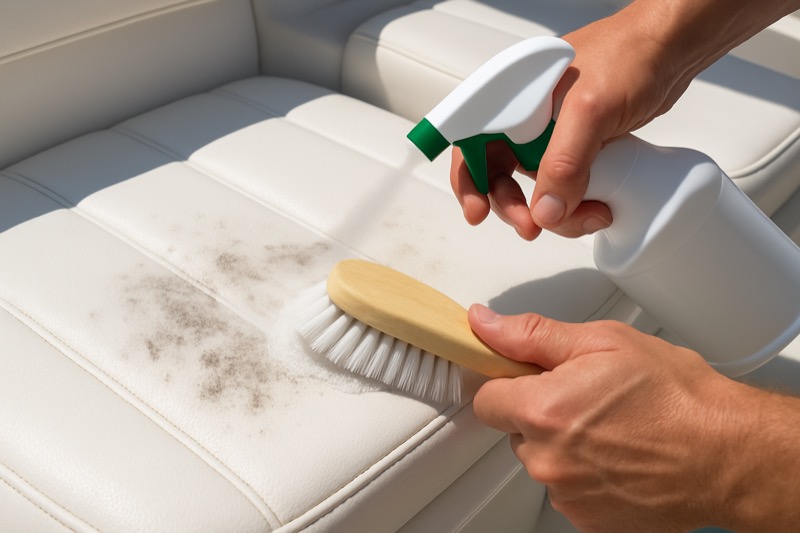
Open up a boat that has been sitting a few weeks in a Florida summer and you know the smell before you even see the problem. That musty, sour odor is mildew, and it loves boat interiors on the Suncoast. Add the white salt crust that works into vinyl seams and the ground in grime that hides in carpet, and the inside of a boat can go from fresh to funky faster than owners expect. The good news is that mildew and salt are beatable, both in how you clean them out and in how you keep them from coming back. Here is the practical guide.
Why boat interiors are mildew magnets here
Mildew is a surface mold, and mold needs three things to grow: moisture, warmth, and something to feed on. A boat interior in Southwest Florida hands it all three on a platter.
Moisture is everywhere. Humidity down here sits high most of the year, and a closed up boat traps damp air inside. Add rain that sneaks past a cover, spray that comes aboard, wet feet, coolers, and the simple dew cycle of warm days and cooler nights, and the inside of a boat stays damp far more than people realize. Vinyl seats and foam cushions soak up and hold that moisture like a sponge.
Warmth is a given. A closed boat in the Florida sun becomes an oven, and that warm, humid, stagnant air is exactly the environment mold thrives in.
Food is the part owners overlook. Mildew does not eat vinyl directly, it eats the film of body oils, sunscreen, salt, pollen, food crumbs, and airborne grime that settles on every surface. A seat that looks clean still has an invisible buffet on it. That is why keeping surfaces genuinely clean is the real key to preventing mildew, more than anything else.
Put moisture, heat, and that food film together in a closed boat and mildew is not a possibility, it is a near certainty unless you actively fight it.
The salt problem is different but related
Salt is its own issue and it behaves differently from mildew. When saltwater spray dries on your interior, the water evaporates and leaves salt crystals behind, worked into the grain of the vinyl, the stitching, the carpet fibers, and the non skid. Salt is not alive, so it does not grow, but it causes trouble in two ways.
First, salt is hygroscopic, which means it pulls moisture out of the air and holds it against the surface. So a salty seat stays damp longer than a clean one, which feeds the very mildew you are trying to prevent. Salt and mildew are partners in crime.
Second, salt is mildly abrasive and corrosive. Left in vinyl seams and around snaps, zippers, and fasteners, it accelerates wear and rusts the metal bits. Over time, salt left in upholstery dries it out, stiffens it, and shortens its life.
The fix for salt is water, specifically thorough freshwater cleaning that dissolves and rinses the crystals out rather than just wiping the surface. Wiping a salty seat with a dry rag mostly just moves crystals around. You have to dissolve them.
Getting mildew out of vinyl seats
Marine vinyl is tough, but it needs the right approach or you will damage it while cleaning. Here is how a proper job goes.
Start by getting the loose stuff off, brushing away dirt and debris and giving the seats a good freshwater rinse to lift surface salt and grime. Cleaning mildew into a gritty, salty surface just grinds it in.
Then treat the mildew itself with a cleaner made for marine vinyl. This matters more than people think. Household bleach and harsh cleaners are a common mistake, because while bleach can kill surface mildew, it also attacks the stitching threads and can dry out and discolor the vinyl. The seams are usually what fail first on boat seats, and bleach speeds that failure. A proper marine grade mildew cleaner lifts the staining without destroying the material or the thread.
Work the cleaner in with a soft brush, paying attention to the seams and low spots where mildew colonizes first, because the piping and stitch lines are where the food film and moisture collect. Let the product do its job, then rinse thoroughly and, crucially, dry the surface. Leaving seats wet just resets the clock.
Deep set mildew that has worked into the foam beneath the vinyl is a harder case. Sometimes staining that keeps coming back is a sign that moisture and mold have gotten into the cushion foam through failed seams, and that is a bigger job that may mean pulling cushions to dry them out properly or, in bad cases, re foaming. That is exactly the kind of thing our interior detailing service is set up to handle, and we will tell you honestly when a seat is a cleaning job versus a repair job.
Once vinyl is clean, the last step is a marine vinyl protectant that conditions the material and leaves a surface that resists the food film and sheds moisture better. Protected vinyl stays cleaner longer and is far less hospitable to mildew.
Getting salt and stains out of boat carpet
Snap in and glued down boat carpet is a salt and grime trap, because everything that comes aboard on wet feet and dripping gear ends up in the fibers. Cleaning it well is mostly about water and extraction.
The most effective approach is a deep clean that flushes the carpet with fresh water and a marine safe cleaner and then extracts the dirty water back out, rather than just spraying and wiping. Extraction is the key word. Salt and fine grime live down at the base of the fibers, so you want to dissolve them and pull the dirty water out, not just clean the tips of the fibers and leave the salt sitting at the roots.
Snap in carpet has a big advantage here, because you can pull it out, clean it thoroughly, and let it dry completely in the sun before it goes back. Drying completely is essential, since carpet that goes back damp becomes a mildew farm underneath, out of sight against the deck. Glued down carpet is harder because it cannot come out, so it needs careful extraction and real drying time in place.
Honestly, a lot of older boat carpet reaches a point where cleaning only does so much, and owners are often happier having tired carpet cleaned as a stopgap while they consider replacement. We will give you a straight read on which side of that line yours is on.
The habits that keep it from coming back
Cleaning is only half the battle. On the Suncoast, prevention is what actually keeps a boat interior fresh, and it comes down to controlling moisture and keeping the food film off.
Rinse the salt off. After saltwater trips, a freshwater rinse of the interior surfaces keeps salt from building up and holding moisture. This is the same habit that protects your exterior, and it pays off inside too.
Let it breathe and dry. The single biggest mistake is sealing a damp boat up tight under a cover in the heat. That traps humidity and creates the perfect mildew chamber. Where you can, let the interior dry out before covering, use a cover that allows some airflow, and consider moisture absorbing products in enclosed cabins and lockers. Prop cushions up so air moves around and under them rather than trapping damp against the deck.
Keep surfaces genuinely clean. Since mildew feeds on the film of oils, sunscreen, and grime, regular wipe downs remove its food supply. A boat whose interior gets cleaned on a schedule simply does not give mildew enough to eat to take hold.
Protect the vinyl. A good marine protectant makes vinyl slicker and less absorbent, so the food film does not stick as easily and moisture beads instead of soaking in. Protected seats stay fresh far longer between cleanings.
Where snowbird boats go wrong
The worst interiors we see almost always belong to boats left sitting closed up through a Florida summer while the owner is up north. Months of heat and trapped humidity with no one opening the boat is the ideal recipe for mildew to take over seats, carpet, and cabins. Owners come back in the fall to a boat that smells and looks nothing like the one they left.
If you head north for the season, the fix is not complicated but it does require a plan. Have the interior cleaned and fully dried before it is closed up, control the moisture inside, and arrange for the boat to be checked and aired out periodically rather than left sealed for six months. Or plan on a thorough interior detail when you return to reset it. We handle a lot of both, and a fall catch up detail is a routine job for us.
Let us reset your interior
A boat interior that has gone musty and salt stained can look and smell almost new again with the right cleaning, and then stay that way with the right habits. The trick is using marine safe products and real technique instead of harsh cleaners that damage vinyl and stitching, and then controlling the moisture that let mildew move in.
If the inside of your boat has gotten away from you, we can bring it back. Our interior detailing service covers vinyl, upholstery, carpet, and cabins, and it pairs naturally with an exterior wash and detail and a spot on our recurring maintenance program so the whole boat stays fresh without you having to think about it. Browse everything we do on our services page, see straightforward numbers on our pricing page, or get a free quote. We freshen up interiors on boats all over the county, from Casey Key to Nokomis to Venice, and most owners are amazed how much better the boat feels once that musty smell is finally gone for good.