Cable penetrations: what they do to your hull
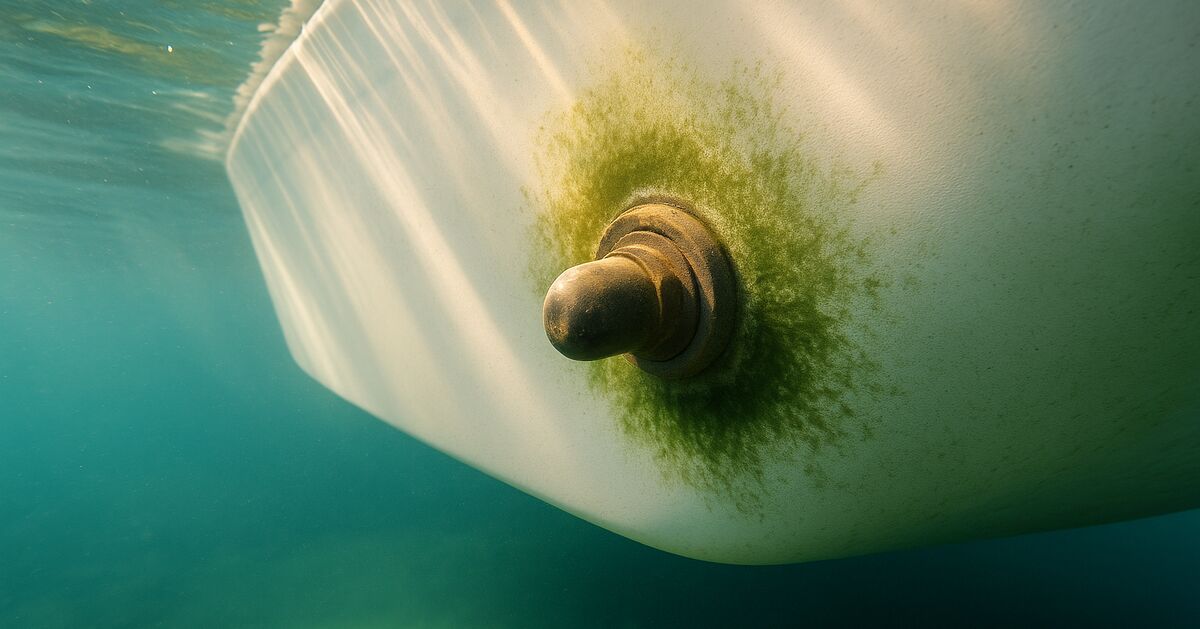
Every season, boat owners up and down the Sarasota coast spend good money fighting stains and hull fouling that trace right back to a hole they drilled three years ago and forgot about. Fish-finder transducers, VHF antenna cables, chartplotter wiring, livewell pumps, bilge pump discharge fittings - each one punches through your hull, and every penetration point is a slow-motion problem waiting to develop.
Understanding what happens at those holes, and why, will change how you think about hull maintenance whether you keep your boat at a marina in Sarasota, on a lift off Longboat Key, or trailered back to a driveway in Osprey or Nokomis after each trip.
Why a Cable Hole Is Never "Just a Hole"
When a penetration is drilled through a fiberglass hull, several things are exposed at once: the gelcoat surface, the laminate beneath it, and (depending on hull thickness) sometimes the core material. A quality installation seals all of that with a marine-grade sealant such as 3M 4200 or 5200, but sealants are not permanent. UV radiation, thermal cycling, vibration from the engine, and simple age cause sealant to shrink, crack, and pull away from the hull surface.
Once the seal fails even slightly, two things start happening simultaneously:
- Water wicks inward. Fiberglass laminates and foam or balsa core materials are not waterproof on their own. They rely on the gelcoat and properly sealed penetrations to keep moisture out. When water enters through a cracked sealant bead, it begins saturating the laminate. Per the American Boat and Yacht Council (ABYC) standards on hull construction and hardware installation, even small voids in sealant around through-hull fittings are considered a maintenance concern because water intrusion into cored panels accelerates delamination over time.
- Contaminants leach outward. This is the part that directly affects hull cleanliness. Moisture trapped inside the laminate carries dissolved minerals, oxidized fiberglass resin, and sometimes rust from nearby hardware. As the boat sits in the water or is repeatedly wetted and dried, those compounds wick outward through the gap and deposit on the gelcoat surface surrounding the penetration.
The result is a characteristic rust-brown or gray stain that fans out below and around the fitting in a pattern that looks almost like a waterfall frozen in place.
The Specific Staining Patterns to Know
Not every penetration stains the same way. Knowing what you are looking at helps you trace the source and prioritize repairs.
Transducer penetrations through the hull bottom tend to produce circular or teardrop-shaped brown staining directly around the fitting. Because this area sits submerged, the staining also interacts with biological growth. Algae and biofilm anchor easily to rough or contaminated surfaces, so a transducer hole that has leached mineral deposits becomes a perfect recruitment site for fouling organisms. If you have ever noticed that barnacle or slime growth seems thicker in a ring around your transducer, that contamination from the sealant failure is a likely contributing factor.
Sidewall penetrations for bilge pump discharge or livewell intake/return lines often produce long vertical streaks running down the hull toward the waterline. Bilge water is not clean water. It contains oil, fuel residue, dissolved minerals from the bilge itself, and biological matter. When the discharge hose or fitting seal fails even partially, a thin film of bilge effluent escapes around the fitting and runs down the hull. Salt spray and sun then bake it into the gelcoat. These streaks are chemically similar to the exhaust staining you might read about in our post on diesel exhaust staining on a transom, in that both involve carbonaceous or oily residues bonding to oxidized gelcoat.
Electronics cable penetrations above the waterline (antenna cables through a hardtop or helm area, for instance) cause a different problem. Above-waterline sealant sees more UV exposure and thermal expansion, so it fails faster in terms of cracking. Rain and condensation enter the gap, and on the interior side, this moisture feeds mold and mildew growth. On the exterior, staining is often gray or black, caused by mold spores that grow in the perpetually damp microenvironment right at the fitting edge.
Salt and Sun Make Everything Worse
The Gulf Coast environment accelerates every one of these processes. Sarasota County sits in a subtropical climate where summertime humidity regularly exceeds 85 percent, water temperatures stay warm enough to support aggressive biological growth for eight or more months of the year, and UV index readings are among the highest in the continental United States according to EPA solar radiation monitoring data. Those conditions mean:
- Sealants cure and crack faster due to thermal cycling between the intense sun heat on a hull surface and the relatively cool water.
- Biological fouling recruits faster to any surface irregularity or contaminant deposit, particularly in the warmer months when phytoplankton and bacteria are most active in Sarasota Bay and the Gulf.
- Salt crystals accumulate in the micro-gap around a failing sealant bead. As they dry and rehydrate repeatedly, they physically widen the gap over time, a process known as salt-crystal wedging.
Boats kept in wet slips, particularly in areas with slower water exchange like some of the protected canals off Siesta Key and Bird Key, tend to see faster fouling around penetration points because those areas favor biofilm development. Boats on lifts in more exposed locations get better flushing but still deal with UV-driven sealant degradation on topsides and cabin penetrations.
How Neglected Penetrations Interact With the Rest of the Hull
A stained or fouling-compromised area around a penetration does not stay isolated. This is one of the less intuitive aspects of hull cleanliness: contamination spreads.
When you run the boat, water flows across the hull. Biofilm and mineral deposits from around a transducer hole break free in fragments and get smeared further aft by hull flow. On a boat that sits in a slip, tidal movement and wakes do the same thing slowly over days and weeks. The result is that staining that started as a two-inch ring around a fitting can become a blotchy streak extending a foot or more in the direction of water flow.
Oxidized gelcoat makes this worse. As the gelcoat chalks and loses its smooth surface, it becomes microscopically porous and holds staining more tenaciously. Our post on what skipping post-outing cleaning does to your gelcoat covers how a neglected surface compounds problems, and cable penetration staining is a textbook example of that principle.
Cleaning Around Penetrations: What Works and What Doesn't
Removing penetration-related staining requires a different approach depending on what type of stain you are dealing with.
Iron and mineral stains (the rust-brown type often seen around transducers and metal hardware backings) respond to oxalic-acid-based cleaners. Products like Star Brite's Hull Cleaner or similar marine oxalic formulas are designed for this. They should be applied carefully, kept off non-target areas, and rinsed thoroughly, because oxalic acid can dull gelcoat if left on too long. Per the manufacturer directions on most marine hull cleaners, dilution and contact time matter significantly.
Biological staining (green, brown, or black biofilm around submerged or constantly wet penetrations) often requires an enzymatic or surfactant-based cleaner. Simple scrubbing with a soft brush and a marine wash concentrate will remove fresh growth, but older, set-in biological staining often needs a dedicated mildew and stain remover.
Black or gray mold staining at above-waterline cable penetrations responds to diluted non-chlorine oxygen bleach cleaners. Chlorine-based bleach is best avoided on gelcoat, since it can strip wax, fade color, and damage nearby rubber and vinyl.
Mechanical cleaning around fittings requires care. Pressure washing directly at a penetration fitting, particularly one with a compromised sealant bead, can force water further into the gap and worsen the underlying intrusion problem. Our post on soft-washing vs. pressure washing and what each does to gelcoat explains why lower-pressure approaches are often better for detail work around fittings and hardware.
What a Professional Detail Covers (and What It Doesn't)
A thorough hull cleaning and detail by a professional service will address the surface staining around cable penetrations. A good detailer will identify the stain type, select the right chemistry, clean the affected gelcoat, and then protect it with wax or sealant so the cleaned surface is less hospitable to new contamination. You can see the full scope of what that process involves on our boat cleaning and detailing services page.
What a detail cannot do is fix the root cause. If the sealant at a fitting has cracked or pulled away from the hull, the staining will return, often within a season, until the fitting is rebedded properly. This is a separate repair that a marine technician or rigger should handle, not a detailer. A good detailer will point it out to you, though, because they are looking closely at every inch of the hull surface.
How to Stay Ahead of the Problem
Prevention is straightforward but requires a routine.
- Inspect penetration sealants annually. Walk the hull and press gently on the sealant bead around every fitting. It should feel firm but slightly flexible, not hard and cracked or soft and gummy. Cracks, gaps, or areas where the sealant has pulled away from the hull or fitting are signals to rebedd.
- Clean around fittings after every few outings. A quick wipe with a damp cloth and mild soap around above-waterline penetrations removes salt and grime before they have a chance to set.
- Wax penetration areas with the rest of the hull. A good coat of marine wax over the gelcoat surrounding a fitting makes the surface smoother and less absorbent, which slows down both biological recruitment and mineral staining.
- Keep bilge water as clean as possible. Using bilge absorbent pads inside the bilge reduces the hydrocarbon load in the water that eventually gets pumped out through the discharge fitting.
- Document the location of every penetration. Knowing what hole serves what function makes it far easier to trace a new stain to its source. A simple photo of the hull bottom after a haul-out, annotated with fitting locations, takes five minutes and saves considerable guesswork later.
Owners who keep boats in Osprey and Nokomis and trailer to the Casey Key or Venice area launches often have an easier time inspecting hull penetrations regularly because haul-outs are part of the routine. For owners in wet slips throughout Sarasota Bay, scheduling an annual hull inspection as part of a professional detail is the practical equivalent.
Putting It All Together
Cable penetrations and electronics hardware installations are engineering decisions that have real, long-term consequences for hull cleanliness and gelcoat integrity. A properly sealed fitting that gets inspected and rebedded on a sensible schedule causes almost no staining or fouling problems. A failing fitting, left unaddressed, becomes a staining source, a fouling anchor point, and eventually a delamination risk, all for the cost of avoiding an hour's maintenance.
The Gulf Coast environment around Sarasota is beautiful but genuinely hard on boats and the materials they are built from. Pairing good installation practice with a consistent boat cleaning and detailing routine is the combination that keeps hulls clean, protected, and holding their value year after year.
If you have noticed staining around any of your hull fittings and want a professional eye on what is happening and what it will take to clean it up, we are glad to help. Reach out through our contact page and we can walk through what your boat needs.
Sources & further reading
- ABYC Standards and Technical Information Reports for Small Craft (American Boat and Yacht Council)
- UV Index and Solar Radiation Monitoring Data (U.S. Environmental Protection Agency)
- Fiberglass Boat Construction and Repair Guidance (U.S. Coast Guard Office of Boating Safety)
- Florida Climate and Humidity Data (NOAA National Weather Service Tampa Bay)
Claim-by-claim audit (4 checked)
- “Per the American Boat and Yacht Council (ABYC) standards on hull construction and hardware installation, even small voids in sealant around through-hull fittings are considered a m…” (cited → abycinc.org)
- “Sarasota County sits in a subtropical climate where summertime humidity regularly exceeds 85 percent, water temperatures stay warm enough to support aggressive biological growth fo…” (cited → weather.gov)
- “Chlorine-based bleach is best avoided on gelcoat, since it can strip wax, fade color, and damage nearby rubber and vinyl.” (rewritten to what the article can stand behind)
- “Pressure washing directly at a penetration fitting, particularly one with a compromised sealant bead, can force water further into the gap and worsen the underlying intrusion probl…” (reasoning shown in the article)