How slip location affects hull fouling speed
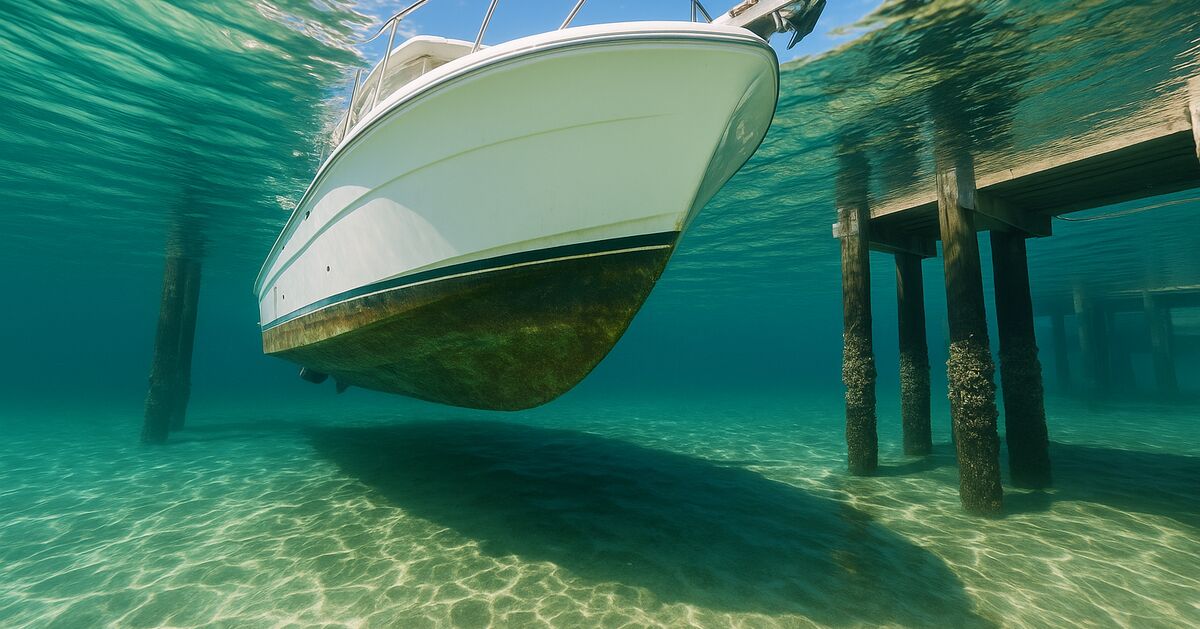
Your slip number is doing more work than you think. Two boats docked at the same marina, fifty feet apart, can grow bottom fouling at noticeably different rates, and the reason has everything to do with the water column surrounding that specific spot. Understanding why helps you set realistic cleaning intervals, choose the right antifouling strategy, and avoid the expensive surprise of a hull so packed with barnacles that your fuel economy tanks before you even notice.
Why fouling biology matters before geography
Biofouling is not a single event. It unfolds in stages. Within hours of launching, a conditioning film of dissolved organic molecules coats every underwater surface. Bacteria colonize that film within a day or two. Diatoms and other microalgae follow, forming the slippery biofilm many owners call "slime."" That biofilm is the welcome mat for macrofouling organisms: barnacle cyprids, bryozoans, mussels, tubeworms, and eventually algae you can see from the dock. Each biofouling stage tends to promote the next, so early neglect can accelerate later fouling.
What changes that timeline is the local environment: temperature, salinity, dissolved nutrients, water clarity, current velocity, and light penetration. Sarasota Bay and the surrounding waters from Longboat Key down through Nokomis and Venice are not one homogeneous body of water. They are a patchwork of microclimates, and your slip sits in one of them.
The nutrient gradient: north bay versus south bay
Sarasota Bay proper stretches roughly from the Longboat Key Pass area in the north down toward Little Sarasota Bay near Casey Key and Osprey. The northern reaches, particularly around the channels off Bird Key and the City of Sarasota's downtown waterfront, receive meaningful freshwater and nutrient input from urban stormwater outfalls. The Florida Department of Environmental Protection's water quality monitoring data for Sarasota Bay shows that nutrient concentrations (nitrogen and phosphorus) tend to be elevated in areas near impervious urban surfaces and older stormwater infrastructure.
Why does that matter for your hull? Elevated nutrients feed phytoplankton blooms, and phytoplankton blooms feed the larval settlement of barnacles and mussels. More food in the water column means higher densities of barnacle nauplii and cyprids looking for a hard surface to call home. A boat parked in a slip near a stormwater discharge point can accumulate a visible biofouling layer weeks faster than an equivalent boat sitting in the cleaner, more oceanic water flushing through a pass.
Tidal flushing: the single biggest variable
Of all the physical factors, tidal exchange is the one that separates fast-fouling slips from slow-fouling ones most reliably. Sarasota's tidal range is modest (typically under two feet), but the geometry of the bay determines how much of that tidal energy actually reaches your hull.
Marinas situated close to a tidal pass, like those on the bay side of Siesta Key near Midnight Pass Road, or the marina facilities near New Pass off Lido Key, experience relatively strong tidal flushing. Cleaner, higher-salinity Gulf water pushes through these passes twice daily. Barnacle and bryozoan larvae are diluted, bottom sediment stays suspended rather than silting up, and the water column remains relatively oligotrophic (low in nutrients). Fouling still happens, but the pace is measurably slower.
Contrast that with a slip tucked into a back basin with minimal tidal exchange. These spots feel calm and protected, which is great for gelcoat and canvas, but the water can become warmer and nutrient-richer as it stagnates between tidal cycles. Warm, nutrient-rich water is exactly the cocktail that accelerates every stage of biofouling development. If your marina is a long, narrow canal off Sarasota Bay with a single, narrow entrance, your hull is almost certainly growing fouling faster than your neighbor who is docked in a more open-water setting.
Salinity: the underappreciated dial
Freshwater and brackish environments suppress some fouling species while encouraging others. The barnacles that give fiberglass hull owners the most grief (primarily Amphibalanus amphitrite and Amphibalanus eburneus in Florida waters, per University of Florida IFAS coastal research) are highly tolerant of reduced salinity but do have thresholds. In areas near the mouth of Phillippi Creek or near drainage canals along the Sarasota bayfront, salinity can dip noticeably after heavy rain events, briefly suppressing barnacle settlement.
The tradeoff is that low-salinity conditions favor certain algal fouling species and some tubeworms. You may get less barnacle rock but more soft fouling, which is easier to remove but can grow even faster, coating running gear in dense mat that adds hydrodynamic drag almost as effectively. Boats at Casey Key marinas, which sit between the higher-salinity Intracoastal near Nokomis Beach and the more diluted areas further north, tend to see a mixed fouling community that shifts noticeably with seasonal rainfall.
Water temperature: summer versus winter cleaning intervals
Florida's warm winters are part of the appeal, but they also mean biofouling never fully stops the way it does for boaters in northern states. Barnacle reproduction and larval settlement tend to accelerate in warmer water, and Sarasota Bay stays warm for roughly eight to nine months of the year.
Shallow, darker-bottom flats in southern Sarasota Bay near Osprey and Nokomis likely run somewhat warmer in summer than deeper, better-flushed channel water near Sarasota city. That difference is enough to push hull fouling from nuisance to serious problem within a single month between cleanings. Owners with slips in shallow back-bay areas genuinely need shorter cleaning intervals during summer than owners in deeper, tidally-active locations.
Sunlight and turbidity: the light factor
This one surprises people. Photosynthetic fouling organisms (green and brown algae, diatoms, cyanobacteria) need light to grow. Slips on the west-facing side of a marina get afternoon sun on the waterline and the first foot or two of hull below it. That band is often the most algae-fouled part of the hull, and it grows noticeably faster than the shaded lower sections.
Turbid water, on the other hand, blocks light penetration and can actually slow algal fouling on deeper hull sections. Parts of Sarasota Bay near areas with active boat traffic (resuspended sediment) or near outfalls can be turbid enough to limit how deep photosynthetic fouling penetrates. In very clear water closer to Gulf passes, light reaches deeper, and soft algal fouling can colonize more of the hull. The net effect depends on which fouling community is dominant in your slip's microclimate.
Boat activity: the factor you can control
A boat that moves regularly grows fouling more slowly than one that sits still week after week. Hydrodynamic shear from hull movement physically disrupts the early biofilm stage before macrofouling can anchor. Owners who take their boats out two or three times a week (or even once a week at cruising speed) benefit from a natural fouling delay. Boats that sit in their slips for two or three weeks between outings lose that advantage and lean entirely on their antifouling paint system.
Our post on what skipping post-outing cleaning does to your gelcoat covers the topside consequences of dock time, but below the waterline the stakes are even higher. Each day of static immersion is a day the biofilm matures.
Practical implications: how to set your cleaning schedule
Given everything above, here is a framework for thinking about your specific slip:
- High-flushing, deep-water slip near a tidal pass (e.g., marina off New Pass, Lido Key or Longboat Key north end): fouling tends to be moderate and often dominated by barnacles rather than soft growth. Cleaning intervals of every six to eight weeks during summer are a reasonable starting point for most properly painted hulls.
- Back-bay or canal slip with limited tidal exchange (common in some Sarasota bayfront side basins): expect faster soft-fouling accumulation, particularly in summer. Four to six weeks is often a more appropriate interval. Left longer, barnacles can become established and brushing alone will not remove them cleanly.
- Shallow, warm-water slip in south bay near Osprey or Nokomis: summer water temperatures push the biology hard. Some owners in these locations find monthly cleaning is the only way to keep running gear and rudders clean enough to avoid performance loss.
- Slips near stormwater inputs or canal terminations: nutrient loading accelerates every stage. Combine with heat and low current and you have the fastest-fouling conditions in the region.
If you are unsure where your slip falls in this spectrum, look at the inside of your dock pilings at low tide. Heavy barnacle or mussel growth on pilings that are fully submerged is a reliable proxy for the larval pressure your hull is under. Clean pilings usually mean cleaner hulls; encrusted pilings are a warning sign.
Our services page covers the different levels of in-water hull cleaning we offer, from maintenance brushings to full bottom scrubs, and pairing the right frequency to your slip conditions is something we are happy to talk through on a first visit.
What to tell your service provider
The more context you give, the better. Before scheduling a hull cleaning, it helps to mention:
- How long the boat has been sitting since the last cleaning
- Whether you've noticed a change in fuel economy or top speed (early indicators of fouling drag)
- The approximate depth of your slip and whether it gets noticeable tidal current
- What antifouling paint is on the hull and when it was last applied
This information changes how aggressive the cleaning approach needs to be. A hull with four months of soft growth in a low-current slip needs a different approach than a hull with six weeks of light barnacle spotting in high-flushing water.
You can read more about our team and how we approach local conditions to understand why we factor in bay geography as part of every service conversation, not just the paint and the brush.
The antifouling paint angle
Slip location should influence your paint choice, not just your cleaning frequency. Ablative (self-polishing) paints that rely on water movement to expose fresh biocide may underperform in stagnant back-basin slips because there is not enough flow to erode the paint surface properly. Hard modified epoxy paints tolerate low-flow conditions better but require more aggressive scrubbing to maintain. Copper-based ablative paints are commonly used in Florida recreational boating and generally perform well in Sarasota Bay conditions, but matching the formulation to your slip's flow environment is worth discussing with your bottom-paint supplier before haul-out.
For a deeper look at how environmental placement affects your protection strategy, our post on why Siesta Key boats oxidize faster than Longboat Key boats explores how bay geography shapes topside degradation using similar logic.
A note on our service coverage across the bay
We clean hulls throughout all of our service locations, from the marinas off Longboat Key and Lido Key in the north, through the busy Sarasota city waterfront, all the way down through Bird Key, Siesta Key, Casey Key, Osprey, Nokomis, and into Venice. Because we work across this entire stretch of water regularly, we have direct, hands-on familiarity with how fouling patterns shift from one end of the bay to the other. That local knowledge informs the frequency and method we recommend for every boat we service, and it is part of what makes a local provider more useful than a generic cleaning schedule you find online.
If you have questions about what fouling pressure your specific slip is likely under, or you want to set up a cleaning interval that actually matches your marina's microclimate rather than guessing, get in touch with us directly and we can walk through it.
Sources & further reading
- Sarasota Bay water quality and nutrient monitoring data (Florida Department of Environmental Protection)
- Antifouling paints and their alternatives (U.S. Environmental Protection Agency)
- Barnacle species identification and Florida coastal biofouling research (University of Florida IFAS Extension)
- Marine biofouling overview and prevention strategies (National Institute of Standards and Technology (NIST))
- Sarasota Bay tidal and hydrological data (NOAA Tides and Currents)
- UF/IFAS Extension (named in this article) (UF/IFAS Extension)
Claim-by-claim audit (7 checked)
- “Each biofouling stage tends to promote the next, so early neglect can accelerate later fouling.” (rewritten to what the article can stand behind)
- “The Florida Department of Environmental Protection's water quality monitoring data for Sarasota Bay shows that nutrient concentrations (nitrogen and phosphorus) tend to be elevated…” (cited → floridadep.gov)
- “A boat parked in a slip near a stormwater discharge point can accumulate a visible biofouling layer weeks faster than an equivalent boat sitting in the cleaner, more oceanic water …” (reasoning shown in the article)
- “The barnacles that give fiberglass hull owners the most grief (primarily *Amphibalanus amphitrite* and *Amphibalanus eburneus* in Florida waters, per University of Florida IFAS coa…” (cited → ifas.ufl.edu)
- “Barnacle reproduction and larval settlement tend to accelerate in warmer water, and Sarasota Bay stays warm for roughly eight to nine months of the year.” (rewritten to what the article can stand behind)
- “Shallow, darker-bottom flats in southern Sarasota Bay near Osprey and Nokomis likely run somewhat warmer in summer than deeper, better-flushed channel water near Sarasota city.” (rewritten to what the article can stand behind)
- “Copper-based ablative paints are commonly used in Florida recreational boating and generally perform well in Sarasota Bay conditions, but matching the formulation to your slip's fl…” (rewritten to what the article can stand behind)