Clean and restore your boat's windshield and isinglass so you can actually see
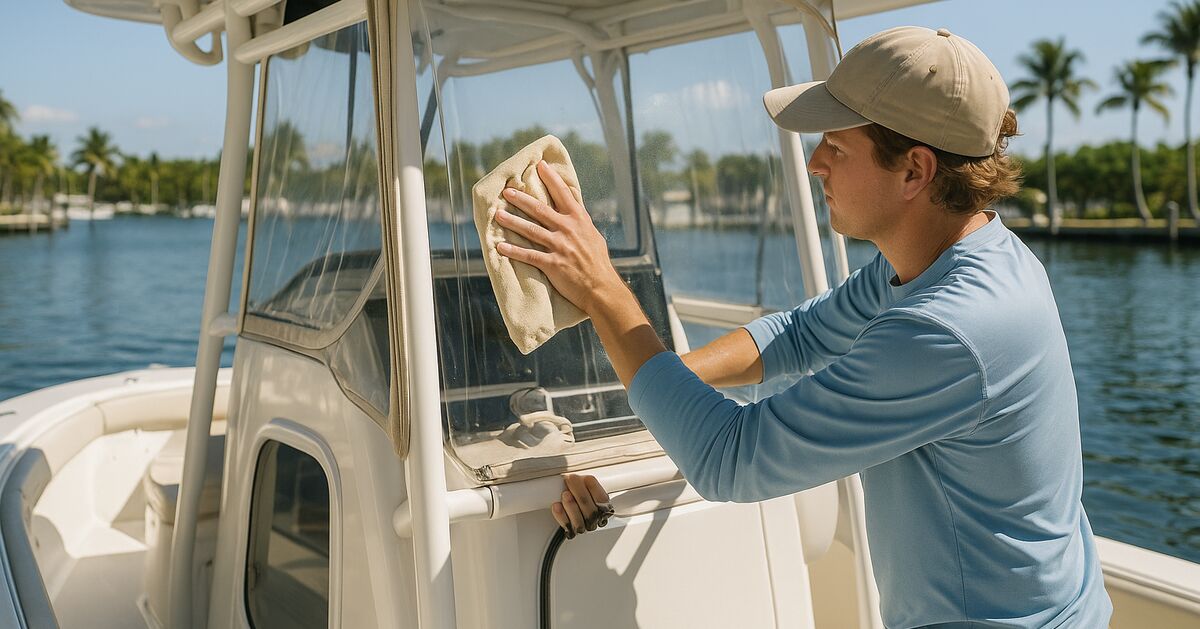
Squinting through a haze of scratches, salt haze, and yellowed plastic while navigating the ICW near Nokomis or crossing the open water off Siesta Key is not just annoying, it is genuinely dangerous. Your boat's windshield and isinglass enclosure panels are your primary window to everything happening in front of you, and when they go cloudy, you lose the ability to spot crab trap floats, submerged logs, or a jet ski cutting across your bow. Cleaning and restoring these surfaces properly is one of the highest-value maintenance tasks you can do for safety and comfort, and it costs almost nothing if you know the right steps.
This guide walks through both materials, glass and flexible isinglass (also called Strataglass or Eisenglass depending on the brand), because they need different products and completely different technique. Using the wrong approach on one will ruin it.
First: understand what you are dealing with
Most center consoles and runabouts around Sarasota have a laminated safety glass windshield at the helm, sometimes with a small curved section in the center. Larger boats, cruisers, and boats with full canvas enclosures, common on vessels docked at Longboat Key Marina or the marinas along Bird Key, typically have panels of flexible clear vinyl sheeting sewn into the canvas. That vinyl is isinglass.
Glass and vinyl behave completely differently under UV exposure, salt, and heat. Glass is hard and relatively scratch-resistant. Vinyl is soft, scratches from the inside of a fingernail, yellows from UV, and becomes brittle when it dries out. The products and tools that work beautifully on glass will permanently scratch or cloud vinyl. Keep that separation clearly in mind throughout this process.
Cleaning a glass windshield: the right order
A glass windshield looks simple but has two enemies that require different fixes: surface contamination (salt, bird droppings, sunscreen residue, fuel mist) and deeper issues like hard water spots and surface corrosion on the edges.
Step 1 - Rinse first, always. Before you touch the glass with anything, rinse it thoroughly with fresh water from a hose. Salt crystals sitting on a dry windshield are abrasive. Wiping a dry, salty windshield with even a soft cloth will grind fine scratches into the surface. On boats in Sarasota Bay or the Gulf, every ride deposits a film of salt spray, so this step is non-negotiable.
Step 2 - Wash with a proper cleaner. Use a pH-neutral soap, a dedicated marine glass cleaner, or a diluted marine wash. Avoid household glass cleaners that contain ammonia. Ammonia attacks the rubber and vinyl seals around the windshield frame, drying them out and eventually causing leaks. Apply with a clean, soft microfiber cloth, not a sponge (sponges trap grit). Work in sections, top to bottom, so dirty water doesn't drip over areas you have already cleaned.
Step 3 - Treat hard water spots. If the glass has white, chalky rings or spots that don't wash off, those are mineral deposits left when water evaporates. A diluted white vinegar solution (one part vinegar to two parts water) applied with a microfiber cloth and left for two or three minutes will dissolve most deposits. Rinse thoroughly after. For stubborn spots, a dedicated marine hard water spot remover works faster and is safe on glass. Avoid anything labeled as a compound or rubbing compound on glass because it will dull the surface.
Step 4 - Polish if needed. If the glass still looks hazy after cleaning, it may have fine surface scratches or oxidation on the edges. A non-abrasive glass polish (not a compound) applied by hand with a foam applicator pad will clear mild haziness. Work in small circles, wipe away residue with a clean microfiber, and check in bright light.
Step 5 - Protect with a rain-repellent treatment. Products like Rain-X Marine or similar hydrophobic coatings bond to the glass surface and cause water to bead and sheet off while underway. On a boat moving through Sarasota's afternoon squalls, this can replace the need for wipers entirely. Apply per the label, buff off the haze, and you are done. Reapply every few months or when water stops beading.
Cleaning isinglass vinyl: patience is everything
Flexible vinyl panels are where most boaters make costly mistakes. The surface looks like glass but behaves more like a soft contact lens. It scratches at almost zero pressure if there is any grit present, and those scratches scatter light, turning the panel from clear to milky.
Never use:
- Paper towels (they scratch vinyl reliably)
- Household window cleaners with ammonia or alcohol
- Acetone, mineral spirits, or any solvent
- Dry wiping of any kind before rinsing
- Abrasive scrubbing pads of any grit level
- A pressure washer on full power at close range
Step 1 - Rinse with low-pressure fresh water. Use a hose, not a pressure washer, and flush the panels front and back. Isinglass that is in an enclosure traps salt, mildew spores, and condensation on the inside too, so both sides need attention. Let the water do the work first.
Step 2 - Wash with a dedicated isinglass cleaner. Products formulated specifically for clear vinyl, such as IMAR Strataglass Protective Cleaner, Plexus, or 303 Multi-Surface Cleaner, are your safest choices. These are very lightly surfactant-based and contain no abrasives or solvents. Apply to a wet panel, not a dry one, using a dedicated soft terrycloth cloth or a clean baby-bath-soft microfiber. Use very light pressure and straight strokes rather than circular scrubbing. Rinse thoroughly.
If you do not have a specialty cleaner on hand, a few drops of Dawn dish soap in a bucket of fresh water is a reasonable emergency substitute. Use the same gentle technique.
Step 3 - Polish out light scratches and haziness. This is where you can actually reverse a lot of the cloudiness that builds up in panels over a season on the Gulf Coast. IMAR Strataglass Protective Polish is the gold-standard product here. It contains extremely fine polishing agents safe for vinyl, and it fills micro-scratches while restoring optical clarity. Apply a small amount to a clean, soft cloth, work it into the panel in overlapping straight strokes with very light hand pressure, then buff away residue with a second clean cloth. In direct Sarasota sunlight, you will often see a dramatic difference immediately.
For panels with deeper scratching or significant yellowing, a two-step process using a vinyl restorer followed by a polish will do more. Novus Plastic Polish #2 (Fine Scratch Remover) followed by #1 (Polish and Shine) is a system many experienced boaters swear by for badly degraded panels.
Step 4 - Apply a UV protectant. This is the step most people skip and it is the reason their isinglass turns yellow and brittle faster than it should. The Florida sun on the water off Casey Key or Lido Key is relentless. A UV protectant like IMAR Strataglass Protective Polish (it doubles as both) or 303 Aerospace Protectant, applied after cleaning and polishing, deposits a UV-blocking barrier on the vinyl surface. It also adds a slight slip to the surface that helps water sheet off and reduces the amount of salt and grime that bonds to the panel between cleanings.
Reapply protectant every four to six weeks if the boat lives outside, or after every two or three washes if it is stored under a cover or in a covered slip.
What to do when isinglass is truly past saving
Isinglass panels do have a lifespan. In Sarasota's climate, even well-maintained panels typically last five to eight years before the vinyl becomes too crazed, cracked, or yellowed to restore. When polishing no longer improves clarity, when you can see spiderweb cracking in the surface, or when the panel has turned a persistent amber color that won't polish out, it is time for replacement rather than restoration. Replacement is a canvas shop job and is worth budgeting for rather than putting off, because degraded panels are a safety issue, not just a cosmetic one.
Storage habits that protect your investment
How you store and maintain panels between uses makes a bigger difference than any product. A few habits that extend panel life significantly:
- Roll canvas enclosure panels up and secure them when the boat is not in use, rather than leaving them zipped tight and baking in the sun.
- Never fold isinglass tightly. Folding creates permanent crease marks that eventually crack the vinyl. Roll it loosely.
- If you must zip panels closed during storage, use a breathable cover over the entire enclosure so there is some airflow. Trapping heat and moisture inside an enclosure is a recipe for mildew on the vinyl and on the canvas stitching.
- Rinse the boat, including the enclosure panels, with fresh water after every salt water outing. Salt left on vinyl overnight accelerates UV degradation because salt acts as a mild abrasive every time the panel flexes in the wind.
Boats docked at marinas along Longboat Key or kept on lifts near Osprey and Nokomis are exposed to salt air continuously, even when not running. A quick hose rinse twice a week during the summer goes a long way toward extending the intervals between full cleanings.
When to call in professional help
Some situations are genuinely better handled by someone with the right equipment and experience. Deep oxidation polishing on glass, removing heavy water staining around windshield frames, or doing a thorough two-sided clean and re-treatment of a full cockpit enclosure on a larger boat is time-consuming and physically demanding work.
A professional boat cleaning and detailing service will have commercial-grade polishing tools for glass, a full inventory of isinglass-specific products, and the technique to work quickly without causing new scratches. If your boat's enclosure panels haven't been properly cleaned and treated in over a year, a one-time professional restoration followed by your own maintenance cleaning every few weeks is often the most cost-effective path. You can read more about what that kind of service includes in our post on what's actually included in a boat detailing package and what to ask for as an add-on.
If you are also dealing with corroded fasteners around your windshield frame, the surrounding canvas, or the bimini top that connects to your enclosure, those are related problems worth addressing at the same time. Our guide on cleaning and protecting your boat's canvas and bimini top in Sarasota's sun and salt air covers the canvas side in detail.
We cover boats throughout the area, from Sarasota and Siesta Key down through Osprey and Nokomis, and we are happy to take a look at what your windshield and isinglass actually need before recommending a course of action. Have a look at our full list of service locations or get in touch to set something up.
A quick reference checklist
Glass windshield:
- Rinse with fresh water before touching
- Wash with ammonia-free marine cleaner and microfiber
- Treat mineral spots with diluted vinegar or marine spot remover
- Polish haze with non-abrasive glass polish if needed
- Protect with a hydrophobic rain-repellent coating
Isinglass vinyl:
- Rinse with low-pressure hose, both sides
- Wash with isinglass-specific or gentle soap cleaner and soft cloth
- Polish scratches with IMAR or Novus plastic polish system
- Protect with UV protectant every four to six weeks
- Roll, never fold, for storage
Clear panels aren't a luxury. On a busy Saturday morning when the ICW traffic near Casey Key is heavy and the afternoon light is low and flat off the Gulf, being able to see through your windshield cleanly is the difference between a safe day on the water and a very bad one. The products and steps above are straightforward, inexpensive, and the results, when you do them in the right order, are genuinely striking.