How to clean and deodorize a livewell so it stops tainting your bait and your boat
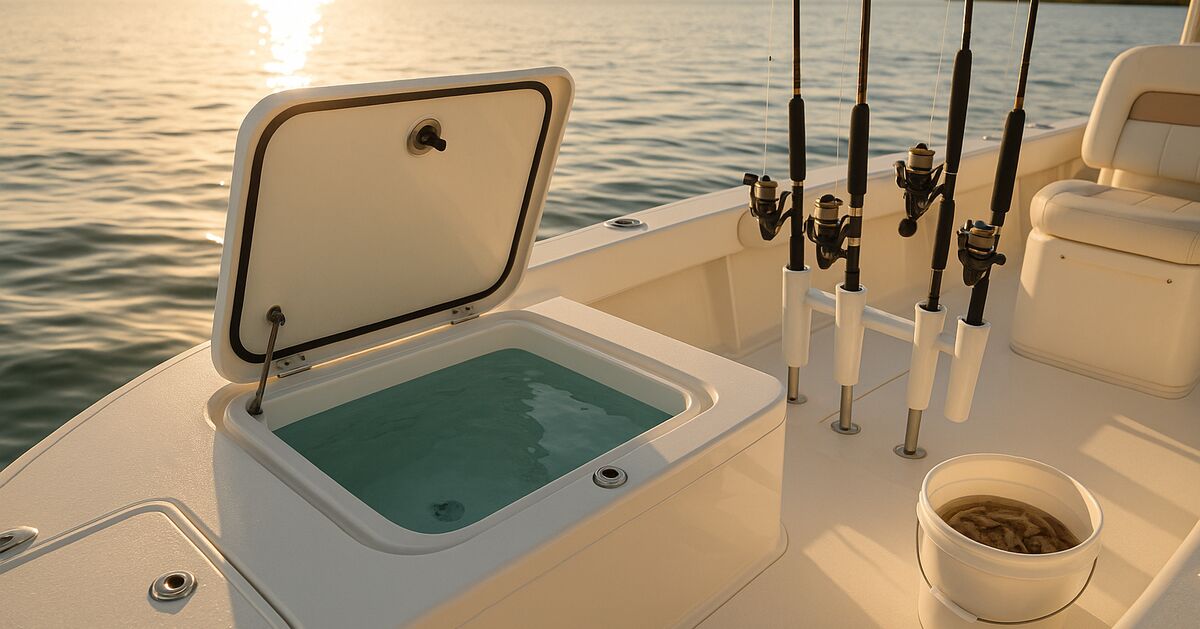
A livewell that smells like low tide on a hot August afternoon is not just unpleasant. It is actively working against you. Bait fish stressed by foul water die faster, your live shrimp turn lethargic, and every time you open that hatch the smell rolls up through the cockpit and into the cabin. The good news is that a neglected livewell is one of the more straightforward things to fix on a boat, as long as you understand what is actually causing the problem and go after it the right way.
What is making your livewell smell so bad?
The short answer is biology. Every time you run water through a livewell you are introducing organic material: fish slime, bait waste, uneaten food, fecal matter, and whatever is floating in the water at your launch site. In a warm climate like ours, that material breaks down fast. Bacteria colonize the plastic walls and foam flotation if your well has it, forming a biofilm that looks like a thin, slick, sometimes discolored coating. When that biofilm grows thick enough, you can feel it with a finger. It is slimy, it smells like sulfur or ammonia, and it is the number-one reason a livewell that "looks fine" still reeks.
Sarasota Bay, Little Sarasota Bay, and the backwaters around Siesta Key and Casey Key are productive fishing grounds, but the water is also warm almost year-round and carries a healthy load of organic nutrients. That is great for the ecosystem and great for fishing. It is also perfect growing conditions for the bacteria and algae that colonize your livewell walls if you give them time to get established.
A secondary issue is the pump screen and the lines themselves. The rubber or plastic tubing that feeds your livewell traps moisture between trips and becomes a breeding ground for mold and bacteria. You clean the well but leave the lines alone, and the next time you run the pump you push that contaminated water right back in.
What you will need before you start
You do not need a lot of specialized products. What you do need is a little patience and the right sequence.
- A stiff-bristled brush that fits the shape of your well (a long-handled bottle brush works well for round wells)
- A softer sponge or cloth for final wiping
- White vinegar (distilled, not cider)
- Baking soda
- A dedicated livewell cleaner or a diluted unscented bleach solution (one tablespoon of household bleach per gallon of fresh water, no more)
- Fresh water, ideally from a hose
- A flashlight so you can actually see what is in there
Avoid heavy-scented cleaners, pine-based products, and anything with a strong chemical residue. Even trace amounts of some cleaners are toxic to bait fish and will wipe out a livewell of live pilchards before you get to your spot. Unscented is the rule.
Step one: dry it out completely first
This sounds obvious, but most livewell problems persist because the well never fully dries between trips. After every outing, drain the well completely, leave the lid propped open, and let it air dry. If you keep your boat on a lift, as many folks around Sarasota and Longboat Key do, crack the cover and let the sun and air do some work. A dry surface is a hostile environment for bacteria. A perpetually damp surface is a petri dish.
If you notice a pink or orange tint on the walls after drying, that is a pigment-producing bacterium called Serratia. It is harmless to you but means the well has been staying wet long enough for a colony to establish. That is your cue to start a more aggressive cleaning routine.
Step two: the initial scrub
Fill the livewell about one-third full with fresh water and add a quarter cup of baking soda. Run the pump for two or three minutes so the solution circulates through the lines. Then drain and scrub every interior surface with your stiff brush. Pay close attention to:
- The corners and seams where the lid meets the well body
- Around the drain fitting and the pump intake screen
- Any foam insulation that is exposed at the top edge
- The underside of the lid itself, which gets splashed constantly and is often ignored
Rinse thoroughly, then do a second fill with your diluted bleach solution or dedicated livewell cleaner. Let it soak for ten minutes, circulate the pump again for a minute or two so the lines get treated, then drain and rinse twice with fresh water. You want no chemical residue left behind.
Step three: attack the odor at its source with vinegar
After the bleach soak and rinse, fill the well one more time with a 50/50 mix of white vinegar and fresh water. Let it sit for fifteen to twenty minutes. Vinegar is mildly acidic, which neutralizes the alkaline compounds that produce that ammonia-style smell, and it breaks down the mineral scale that forms in wells that see a lot of hard tap water. It is also completely safe to rinse away and leaves no harmful residue for bait.
Scrub one more time with the softer cloth, paying attention to the same corners and seams. Drain, rinse with plain fresh water, and then leave the lid open to dry completely before you close the boat back up.
Step four: do not forget the pump and lines
Remove the pump screen and soak it in the vinegar solution for twenty minutes, then scrub it with an old toothbrush. If your pump has an accessible inlet fitting, disconnect the line and flush it with the bleach solution using a funnel or a turkey baster. If the lines are not accessible, running the pump through the cleaning cycles as described above handles most of the contamination.
Inspect the screen while you have it out. A clogged or partly blocked screen reduces flow, which means less oxygen turnover in the well, which stresses and kills bait even if the water is otherwise clean. A lot of anglers who think they have a water quality problem actually have a flow problem in disguise.
How often should you do a full clean?
After every single trip, you should at minimum drain the well completely, rinse it with fresh water, and leave it open to dry. That takes three minutes and prevents biofilm from establishing.
A full scrub-and-deodorize treatment, meaning the baking soda soak, bleach soak, and vinegar treatment described above, should happen at least once a month during active fishing season. In Southwest Florida, "active fishing season" is essentially the whole year for most of us. If you are fishing multiple times a week out of the backwaters around Osprey, Nokomis, or Venice, or you are running offshore trips out of the inlets near Casey Key, bump that up to every two weeks.
At the start and end of the season (or when you come back from an extended time away, which we covered in a broader context in our post about what's actually included in a boat detailing package and what to ask for as an add-on), do a thorough inspection for cracks, crazing, or delamination in the well walls. A small crack is a hiding place for biofilm that no brush will reach.
The bait-killing mistake most anglers make
Cleaning the well with a scented soap or a cleaner that leaves a residue and then not rinsing aggressively enough is the number-one way people accidentally poison their own bait. Even a small amount of surfactant left behind strips the protective slime coat from bait fish and kills shrimp quickly. If your bait is dying fast and you recently cleaned the well, do one more thorough fresh-water rinse and try again.
The second most common mistake is adding ice directly to the livewell to cool it down on a hot day. Ice from a bag or a machine is often made from chlorinated tap water, and while small amounts are usually fine, a large amount of chlorinated water can stress or kill bait just as effectively as a chemical residue. If you want to cool the water, put the ice in a sealed bag and float it in the well instead of dumping it in loose.
What about charcoal or enzyme treatments?
Activated charcoal inserts, enzyme-based livewell treatments, and commercial deodorizing tablets all have a legitimate place in a maintenance routine. They are not substitutes for physical cleaning, but they are useful for keeping a freshly cleaned well smelling neutral between deep-clean sessions, especially if you are heading out on a long trip and want to give your bait the best possible environment.
Enzyme treatments in particular work by introducing beneficial bacteria that outcompete the odor-producing strains. They are completely bait-safe and some anglers swear by them. Just make sure you start with a physically clean well before you use them. Dumping enzymes into a biofilm-coated livewell is like putting air freshener in a room you have not vacuumed.
When the smell is coming from somewhere else
Sometimes you clean the livewell thoroughly and the smell persists. Before assuming the well is still the problem, check a few other sources:
- The bilge, which can hold trapped baitfish water and decomposing organic material
- The rod storage compartments, which often catch drips and bait scraps
- The cooler and any recessed cup holders that bait water splashed into
- The carpet or non-skid deck surface around the livewell hatch
Our post on how to remove fish blood, bait, and odor from your boat after a day on Sarasota's waters goes into detail on tracking down and eliminating those other odor sources, which are often mistaken for a livewell problem.
Local conditions to keep in mind
The water in our area is warm year-round, and that temperature accelerates everything. Biofilm that might take three weeks to reach nuisance levels in the Great Lakes can establish itself in a week here in the summer. Red tide events, which occur periodically along the Gulf Coast from Lido Key down to Venice, can also leave a residue in the well after you run water through it, with its own distinctive and persistent smell. If you were fishing during or just after a red tide event, do a more aggressive cleaning cycle than usual and run several full fresh-water flushes before your next trip.
Brackish water from the estuaries around Bird Key and the ICW carries a different microbial community than the open Gulf. Both will foul a well quickly if you are not diligent. The cleaning process is the same regardless of the source water; the frequency just needs to match how hard you are fishing.
Keeping it clean as a habit, not a project
The anglers who never seem to have a livewell smell problem are not using magic products. They are just consistent. Drain and air-dry after every trip. Do a quick spray-and-wipe with diluted vinegar once a week during heavy use periods. Run a full soak-and-scrub once a month. Check the pump screen every time you take the boat out. That is a routine that takes maybe fifteen minutes a month in total, and it keeps the well in the kind of condition where you can drop in live pilchards in the morning and still have healthy bait at noon.
If your boat is due for a broader refresh and the livewell is just one part of a bigger cleanup job, our boat cleaning and detailing services cover the full picture, and you can check the FAQ for details on what a professional detail typically includes. We work throughout Sarasota County and into Venice and the surrounding areas, and we are always happy to talk through what a boat actually needs before you book anything.
A clean livewell is not a luxury detail. It is basic fishing maintenance, and it makes every trip better.