How to remove fish blood, bait, and odor from your boat after a day on Sarasota's waters
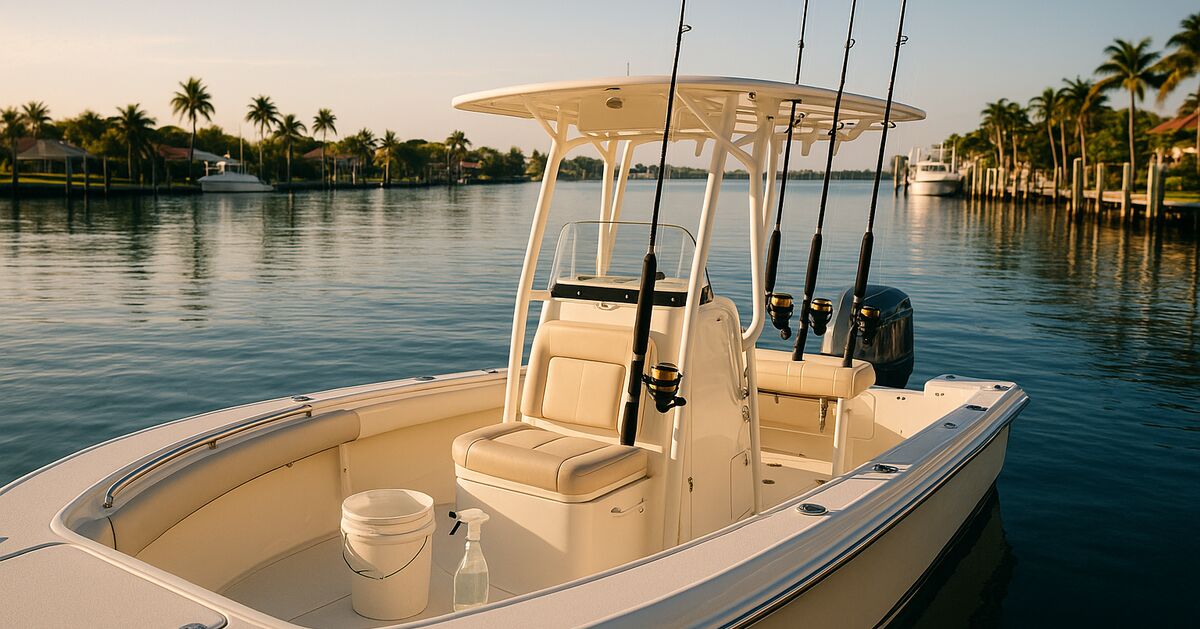
Few things beat a sunrise run out of Sarasota Bay, a cooler full of snook or redfish, and a long morning on the water. What nobody talks about is the mess waiting for you when you pull back into the dock.
Fish blood dries into a rust-colored stain within minutes on a hot fiberglass deck. Cut bait leaves an oily film that bakes into vinyl in Sarasota's summer heat. And that smell - if you've ever climbed aboard a boat that wasn't cleaned after the last trip, you know exactly what we mean. Left even overnight, fish odor works its way into carpet, foam seat cushions, the bilge, and every crack between gel-coat panels.
This guide walks through the full cleanup process: what to use, what order to do it in, what common mistakes make the problem worse, and when to call in professional help.
Why post-fishing cleanup is more urgent here than in most places
Sarasota's climate is brutal on organic material. Summer air temperatures regularly push past 90 degrees Fahrenheit, and surfaces like dark vinyl, fiberglass casting decks, and rubber non-skid can get dramatically hotter sitting in direct sun at a marina or on a lift.
Proteins in fish blood begin to bond to porous surfaces very quickly in that heat. What rinses off cleanly after five minutes can take an enzymatic cleaner and real scrub time to remove after an hour. Bait oils behave the same way - a few squid or pinfish left in a bait bucket or on the deck for an hour in July essentially slow-cook into the surface.
Add salt water to the mix and you've got a recipe for staining, corrosion, and odor that compounds with every trip you delay cleaning. Anglers fishing out of Osprey, Nokomis, and Venice - where snook and tarpon runs draw serious fisherpeople all season - often have larger catches and bigger messes to deal with. The same goes for offshore trips launched from Longboat Key or Casey Key, where anglers come back with amberjack, grouper, and kingfish that produce a lot of blood and slime during the filleting process.
Bottom line: the faster you clean after fishing, the easier the job is, and the longer your boat's interior lasts.
Step one: Deal with the solids first
Before you touch a hose, remove everything that shouldn't be on the boat:
- Empty the bait bucket completely. Rinse it out and let it dry.
- Remove any fish carcasses, cut bait, and filleting scraps. Don't leave them in the trash on the boat - bag them and toss them in a marina dumpster.
- Pull out any towels, rags, or paper used during the trip. These carry blood and bait oil and will contribute to odor if left aboard.
- Take the cooler off the boat and clean it separately. Fish blood and melt water pooling in a cooler that sits in a hot boat storage compartment is a major odor source people often overlook.
Only once solids are gone does rinsing make sense. Running a hose over debris just spreads it around.
Step two: Rinse, but do it right
Fresh water is your first and most important tool. Use a good flow (not a pressure washer on high - more on that below) and rinse the entire boat from top to bottom. Pay special attention to:
- The deck, especially any textured or non-skid areas where blood and slime collect in the grain
- Rod holders, cup holders, and any recessed fittings where bait scraps hide
- The livewell and bait well - rinse them thoroughly with the drain open
- Around the console base and any areas where gear was resting
For the bilge, add fresh water and run the bilge pump to flush out any blood-tinged water or organic matter that drained down during the trip.
One mistake to avoid: using a high-pressure setting on non-skid surfaces, vinyl seams, or around any deck fittings. High pressure drives water under gaskets and into places you don't want it, and can actually force bait residue deeper into textured surfaces rather than lifting it off.
Step three: Treat blood stains before they cure
If there's visible blood on the deck, transom, or gunwales, treat it now, before it dries completely. Cold or cool water is better than hot here because heat sets protein stains - the same reason you don't want fish blood sitting in the sun.
Good options for fresh blood stains:
- Hydrogen peroxide (3% drugstore strength): Works well on fiberglass and white gel coat. Pour it directly on the stain, let it fizz for 30 to 60 seconds, and scrub with a soft brush. Rinse thoroughly.
- Enzyme-based boat cleaners: Products containing protease enzymes break down blood proteins at a molecular level. These are more effective than dish soap on set stains and won't damage gel coat.
- Diluted oxygen bleach (sodium percarbonate): Safer than chlorine bleach on gel coat and vinyl, and effective on protein-based stains. Follow the product instructions - typically a few minutes of dwell time before scrubbing and rinsing.
Avoid chlorine bleach on vinyl or colored surfaces. It can fade and degrade vinyl over time, and on anything other than white gel coat it can cause discoloration that's hard to reverse.
For dried blood that's had an hour or more in the sun, you'll need more dwell time with an enzyme cleaner. Apply it, cover with a wet rag to keep it from evaporating, and give it 10 to 15 minutes before scrubbing.
Step four: Clean the livewell and bait well thoroughly
This is the most overlooked odor source on a fishing boat. Livewells accumulate fish waste, slime, blood, and scale with every trip. Even if you rinse them out, a thin biofilm builds up on the walls over time and becomes a persistent source of smell - especially in warm weather.
Every few trips (or after any particularly messy outing), do a proper livewell cleaning:
- Rinse the well with fresh water.
- Fill it partway with a dilute solution of white vinegar and water, or an enzyme-based boat cleaner.
- Run the livewell pump so the solution circulates through the hoses and aerator.
- Let it sit for 10 to 15 minutes.
- Drain, scrub the walls and lid with a soft brush, and rinse until the water runs clear.
- Leave the lid open to dry out completely before closing the boat up.
Closing a wet livewell in a hot boat is a reliable way to grow mildew and amplify odor.
Step five: Clean vinyl, carpet, and soft surfaces
Fish oil and blood that gets onto vinyl seat cushions or carpet needs to be cleaned with something that actually breaks down oils - not just rinsed off.
For vinyl:
- Use a marine vinyl cleaner (or a dilute dish soap solution for light residue) and a soft brush or microfiber cloth.
- Work in sections and rinse well.
- After cleaning, a vinyl protectant helps repel future stains and slows UV degradation.
- Do not use solvent-based cleaners, acetone, or anything labeled "heavy-duty degreaser" on vinyl. These strip plasticizers from the material, causing it to stiffen and crack over time.
For carpet or non-woven flooring:
- Blot up any liquid or soft material before applying cleaner.
- An enzyme-based carpet cleaner works best here. It breaks down the biological material rather than just masking it.
- Work the cleaner in with a stiff brush, let it dwell, and extract as much moisture as possible.
- Leave hatches and compartment doors open so the carpet can dry completely. Damp carpet in a closed boat compartment is where mildew takes hold.
Step six: Tackle the odor directly
Cleaning removes the source of the smell. Odor treatment takes care of what lingers in the air and in porous materials.
A few approaches that actually work:
- Enzyme-based odor eliminators: These break down the compounds causing the smell rather than covering them. Spray on surfaces, let dry. They're safe for most boat surfaces.
- White vinegar: Inexpensive and surprisingly effective. A 50/50 water and vinegar solution wiped over hard surfaces and let to air dry neutralizes a lot of organic odor.
- Activated charcoal or odor absorbers: Placed inside closed compartments overnight, these help pull odor from the air inside storage areas, bilge compartments, and under-seat lockers.
- Fresh air and sunlight: After cleaning, leave the boat open and aired out as long as possible. Sunlight is a natural sanitizer, and airflow carries odor away faster than anything else.
What doesn't work: air fresheners, deodorant sprays, or anything that just layers a fragrance over the smell. These might help briefly but they don't address the source, and in a hot boat the fragrance burns off quickly while the fish smell stays.
Common mistakes that make fishing odor worse
- Closing up a wet boat. Moisture plus heat plus organic residue equals mildew fast. Always dry and air out before covering or closing.
- Skipping the bilge. Blood and bait water drain to the bilge. If you don't flush it, that's where the worst odor lives.
- Using the wrong cleaner for the surface. Strong solvents on vinyl, chlorine bleach on colored surfaces, and high-pH cleaners on aluminum fittings can cause more damage than the original stain.
- Waiting until the next trip to clean. In Sarasota's climate, a week is more than enough time for staining and odor to become a serious project rather than a quick cleanup.
When the mess is beyond a DIY cleanup
Some situations call for more than a hose and a bottle of cleaner. If you've inherited a boat with years of built-up fish odor, had a charter with a very large catch, or simply missed a few post-trip cleanups in the summer heat, the problem can be deep enough that it needs professional attention.
A professional detail gets into every surface, treats odors at their source with commercial-grade enzyme cleaners, and can restore vinyl and carpet that looks stained beyond hope. Our full boat cleaning and detailing services include interior deodorizing and soft-surface cleaning that makes a real difference on boats with serious fishing residue.
If you fish regularly out of Siesta Key, Longboat Key, or any of the other areas we cover across our full service area, a scheduled detail every few months helps prevent the cumulative buildup that leads to permanent staining and lingering odor.
You might also find our post on what's actually included in a boat detailing package useful if you're wondering whether professional cleaning covers what you're dealing with.
A simple post-fishing checklist
Keep this somewhere handy, and the cleanup stays manageable:
- Remove all solids and trash before rinsing
- Rinse the full boat top to bottom with fresh water
- Treat blood stains immediately with hydrogen peroxide or enzyme cleaner
- Clean and flush the livewell and bait well
- Wipe down vinyl with marine cleaner, rinse well
- Spot-treat carpet or flooring with enzyme cleaner and let dry fully
- Flush the bilge with fresh water and run the pump
- Apply enzyme odor eliminator to any areas with persistent smell
- Leave the boat open and aired out as long as possible before closing up
That process takes 30 to 45 minutes after most fishing trips. It's not glamorous, but it's what separates a boat that stays in good condition from one that smells like bait two weeks after you sold it.
A note on protecting surfaces for easier future cleanups
A well-waxed or ceramic-coated gel coat surface releases fish blood and slime far more easily than oxidized or bare fiberglass. If your deck is looking chalky or porous, cleaning is harder and staining is faster. Our guide on choosing the right boat wax or polish for fiberglass hulls in Sarasota covers how to keep your gel coat in a state where cleanup is quick and stains don't penetrate.
And if you're curious about what regular professional care looks like for an active fishing boat, feel free to get in touch with us directly. We work with anglers all along the coast from Sarasota and Bird Key down through Osprey, Nokomis, and Venice, and we understand what heavy use does to a boat's interior over a season.
The water here is too good to spend it stressed about the mess. A solid cleanup routine after each trip keeps the boat ready to go and the smell where it belongs - out on the water, not in your cockpit.