How to clean and restore a pontoon boat's aluminum tubes and deck after saltwater exposure
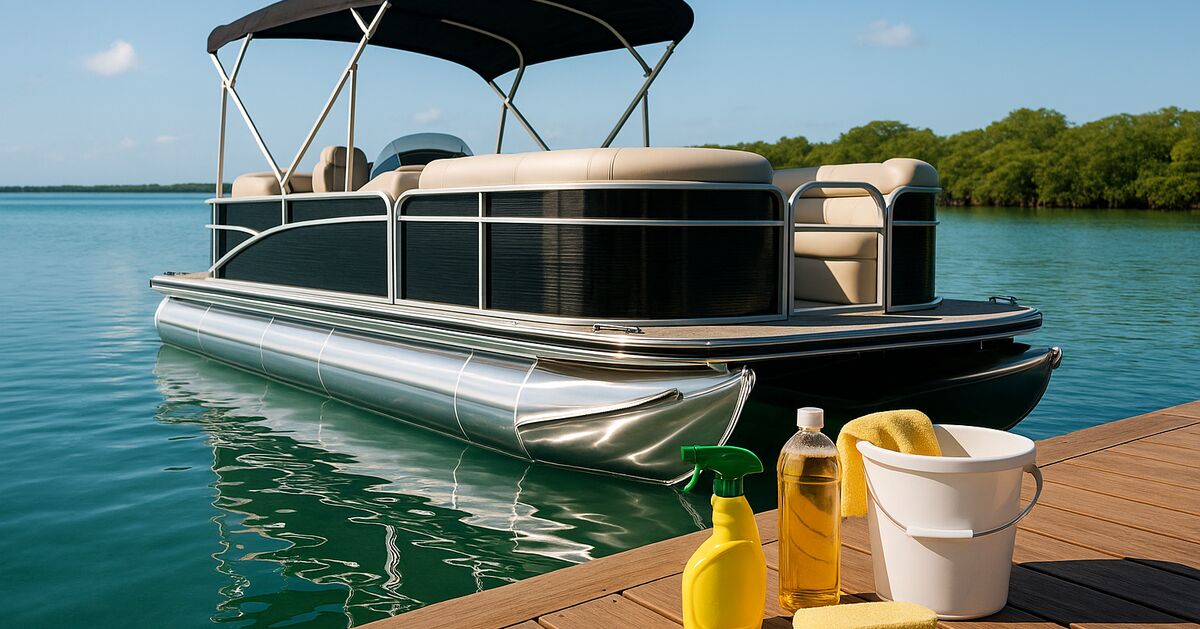
Salt water and aluminum have a complicated relationship. Aluminum looks tough, and in many ways it is, but the moment it meets the chlorides and minerals in Sarasota Bay, a slow battle begins. If you run a pontoon boat on local waters, you have almost certainly noticed the telltale signs: a dull, chalky film on the tubes, white powdery streaks, dark oxidation stains, maybe some pitting near the waterline. Left alone, that damage compounds season after season until you are looking at a restoration project instead of a simple cleaning.
The good news is that most pontoon aluminum responds very well to the right treatment, and the steps below are entirely doable whether you are a hands-on owner or someone deciding whether to hire out the work.
Why Sarasota's water is especially hard on pontoon aluminum
Most of the pontoon boats in our area spend time on Sarasota Bay, Little Sarasota Bay, Roberts Bay, and the Intracoastal. These are shallow, warm, semi-enclosed bodies of water with higher-than-open-ocean salinity in the summer months when evaporation outpaces freshwater input. Add in the near-constant sun, boat wake churn that splashes brackish water up the tubes, and the humid overnight air that never lets anything fully dry, and you have a recipe for accelerated oxidation.
Aluminum oxidizes differently from steel. It does not rust red and flake away. Instead, it forms aluminum oxide, a white or gray powdery layer on the surface. That layer is actually somewhat protective in fresh water, but salt disrupts it, allowing pitting corrosion to dig in underneath. The longer salt sits on bare or thinly protected aluminum, the deeper the damage goes.
This is why a rinse after every outing matters more than most owners realize. It is also why a proper restoration and protective coating applied a few times a year can genuinely extend the life of your tubes by years.
What you will need before you start
Gather everything before you pull the boat out of the water or off the lift. You do not want to be mid-job and realize you are missing something. Here is a practical supply list:
- A quality aluminum brightener or hull cleaner rated for marine aluminum (acid-based formulas work fastest; look for ones that say "safe for aluminum pontoons" on the label)
- A phosphoric acid-based cleaner or oxalic acid cleaner for heavier oxidation and staining
- Soft-bristle scrub brushes, one long-handled for the tubes and one short-handled for detail work
- A bucket, garden hose with good pressure, and ideally a low-pressure pump sprayer
- 3M Scotch-Brite pads (gray or white, never green - green is too aggressive for aluminum)
- Aluminum polish (Flitz, Mothers Mag, or a marine-specific product)
- A marine-grade aluminum sealant or clear coat designed for pontoons
- Microfiber cloths and nitrile gloves
- Eye protection (acid cleaners demand it)
Skip any cleaner that contains bleach or high concentrations of muriatic acid on bare aluminum. Both can cause irreversible pitting and discoloration.
Step one: A thorough freshwater pre-rinse
Before you apply anything, rinse the entire boat top to bottom with fresh water. This does two things. First, it removes loose salt crystals, bird droppings, and sand that would otherwise act like sandpaper under a scrub brush. Second, it pre-wets the aluminum surface so your cleaner does not flash-dry before it has time to work, which matters a lot on a hot Sarasota afternoon.
Pay extra attention to the underside of the tubes, the area near the front nosecones, and any welds or brackets where salt tends to pool.
Step two: Apply aluminum cleaner and work in sections
Never apply aluminum cleaner to a hot, dry surface baking in direct sun. Either work early in the morning, move the boat into shade, or wet the surface heavily first. Heat causes acid-based cleaners to evaporate before they can do their job, and it can also cause streaking or etching.
Apply the cleaner with a pump sprayer or a soft brush, working one section at a time. A "section" means roughly three to four feet of tube length. Let the product dwell for the time listed on the label, typically two to five minutes. You will often see the surface change color slightly as the oxidation lifts. Agitate gently with a soft brush or Scotch-Brite pad using light, circular strokes. Do not scrub hard. The chemistry is doing the work; your job is just to keep it moving.
Rinse each section completely before moving to the next. Letting acid cleaner dry on aluminum causes streaks that are harder to remove than the original oxidation.
Step three: Tackle heavy staining and pitting separately
If you have dark waterline staining, heavy chalky oxidation, or early pitting, a single pass of brightener may not be enough. In these cases, a second application with a slightly more aggressive product (or a longer dwell time) usually handles moderate cases. For pitting that has gone deeper, wet sanding with 400-grit wet/dry paper followed by progressively finer grits (800, then 1500) can level the surface before polishing.
Owners in Osprey and Nokomis who keep their pontoons in canal slips with little current often see more severe scaling because the water sits stagnant against the tubes. If that describes your situation, budget extra time for this step.
Step four: Polish the aluminum
Once the tubes are clean and fully dry, polishing is what transforms dull, flat aluminum into something that actually reflects light again. Apply a small amount of aluminum polish to a microfiber cloth or a foam applicator pad and work it in using firm, overlapping circular motions. Flip the cloth frequently so you are always using a clean surface.
For a full set of pontoon tubes, this step takes time. There is no shortcut. Machine polishing with a variable-speed orbital polisher and an aluminum-appropriate foam pad speeds things up considerably, and many professional detailers use exactly that approach. If you are doing this by hand on a 24-foot pontoon, set aside a full afternoon.
Wipe off the polish residue with a clean microfiber cloth. The tubes should look noticeably brighter at this point.
Step five: Seal and protect
This is the step most owners skip, and it is the most important one for longevity. Polished bare aluminum oxidizes again quickly, especially in a saltwater environment. You need to lock in what you just achieved.
Options include:
- Spray-on aluminum sealants designed for pontoons. These are easy to apply but offer shorter protection, typically a few months.
- Clear coat formulas made for marine aluminum. These last longer, are more durable, but require more careful application and surface prep.
- Marine paste wax applied over polished aluminum. This is not technically the "right" product, but it is widely used and gives a decent short-term barrier in a pinch.
If you are near the water daily on Longboat Key, Lido Key, or Bird Key, where salt air is constant even when the boat is on the lift, a proper sealant is not optional. It is what keeps next month's cleaning manageable instead of a full restoration again.
For ongoing protection tips specific to boat cleaning and detailing on Longboat Key, local conditions really do matter when choosing the right product.
Do not forget the deck
The aluminum deck of a pontoon boat takes different abuse than the tubes. It gets foot traffic, spilled bait buckets, fish blood, sunscreen residue, and whatever else a day on the water brings. Salt water pools in the non-skid pattern and sits there, especially if the boat is not rinsed and allowed to drain properly.
Start deck cleaning with a diluted all-purpose marine cleaner and a stiff deck brush (not so stiff it scratches, but firm enough to get into the non-skid texture). Work in small sections, scrubbing with the grain of the non-skid pattern, then rinse thoroughly. For rust stains left by tackle boxes, anchor chain, or rod holders sitting on the deck, a dedicated rust remover safe for aluminum works well. Apply, let it dwell, and rinse.
If you have fish blood or bait odor ground into the deck, we have a full breakdown of that problem in our post on removing fish blood, bait, and odor from your boat after a day on Sarasota's waters. It covers the enzyme-based products that actually break down the proteins instead of just masking the smell.
Once the deck is clean and dry, apply a non-skid deck coating or a UV-protective sealant formulated for aluminum. This prevents the deck from getting that bleached, porous look and keeps the non-skid texture functional rather than slippery.
Caring for fittings, rails, and hardware
Pontoon boats have a lot of aluminum and stainless steel in close contact, and galvanic corrosion can develop at those contact points over time. Rinse every rail, cleat, and hardware mount after every outing. If you see white powdery buildup around a bolt or screw, address it early. Remove the fastener, clean both surfaces, and use a lanolin-based anti-corrosion compound before reassembly.
Stainless steel rails on pontoons also benefit from a wipe-down with a dedicated stainless steel polish every month or so. It keeps the protective chromium oxide layer intact and prevents the rust "tea staining" you often see on stainless that is left unprotected in salt air.
How often should you do this in the Sarasota area?
As a general rule for pontoon owners in our service area:
- After every outing: Freshwater rinse, top to bottom, including the undersides of tubes
- Monthly: Full wash of tubes and deck with a pH-neutral marine soap
- Every three to four months: Brightener treatment on tubes, polish if needed, sealant reapplication
- Annually (or as needed): Full restoration if oxidation or pitting has developed beyond what monthly maintenance catches
Owners who keep their boats in the water full-time, particularly those docked in canals off Casey Key or Nokomis, may need to move to a more aggressive schedule because submerged or partially submerged aluminum deteriorates faster. Our boat cleaning and detailing in Nokomis page has more detail on what we see in those specific environments.
Common mistakes that make things worse
- Using green Scotch-Brite or steel wool. Both leave embedded particles that rust and stain the aluminum.
- Applying acid cleaner and walking away. Letting it dry causes etching.
- Skipping the sealant. You have done the hard work; protect it.
- Pressure washing the tubes too aggressively. High-pressure water at close range can force water into seams and crevices, and the force itself can damage thin aluminum.
- Using the same cleaner on the upholstery, carpet, and aluminum. Aluminum cleaners are acidic and will damage fabric and vinyl. Use the right product for each surface.
When it makes sense to call in a professional
A thorough pontoon restoration, including tubes, deck, rails, and hardware, takes a full day or more of hands-on work. If your boat has significant oxidation, pitting, or staining that has built up over several seasons, the combination of the right chemicals, machine polishing equipment, and experience genuinely matters. Getting it wrong means etched or streaked tubes that look worse than before.
Our full range of boat cleaning and detailing services includes pontoon-specific packages for boats throughout the Sarasota area, from Siesta Key to Osprey. We work around your schedule, come to your dock or lift, and use products appropriate for the specific conditions in this part of the Gulf Coast.
If you have questions about what your pontoon needs or want to know what a professional service visit would include for your specific situation, our FAQ page covers many of the common questions, and you are always welcome to get in touch directly for a straight answer.
Keeping up with aluminum care is one of those tasks that pays back more than it costs. Do it consistently, and your pontoon tubes will stay bright and structurally sound for the long haul. Let it go too long, and you are looking at a restoration instead of a maintenance visit. The bay is too good out here to have a boat that looks like it has given up.